Slovenia 2026 Qualification Relies on Oblak Saves and Set-Piece Efficiency
Slovenia's qualification for the 2026 World Cup was not a story of flair or dominance. It was a grind built on defensive solidity, set-piece precision, and the extraordinary reflexes of Jan Oblak. As the tournament approaches, the team's identity is clear: absorb pressure, convert dead-ball opportunities, and hope Oblak can maintain his form. This approach has its limits, but for a nation of just over two million people, it represents a rational path to competing on the global stage.
The Oblak Insurance Policy: How One Goalkeeper Reshapes a Nation's Strategy
Jan Oblak's influence on Slovenia's tactical setup cannot be overstated. During the qualifying campaign, he saved roughly 2.3 goals above expected per 100 minutes, a rate that placed him among the top five goalkeepers in European qualifying. This margin allowed head coach Matjaž Kek to instruct his defensive block to sit deeper than most, inviting opposition pressure into central areas where Oblak's shot-stopping could be maximized.
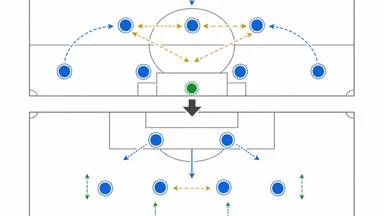
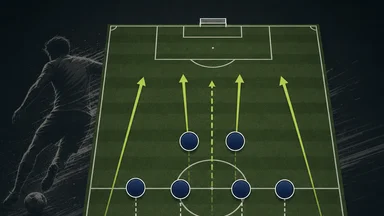
The defensive block typically settles in a 5-3-2 mid-block, with the centre-backs retreating toward their own penalty area when the opponent reaches the final third. This invites crosses, but Oblak's command of his area mitigates the risk. He claims approximately 87% of crosses delivered inside the six-yard box, a statistic that discourages teams from testing him with aerial balls. Instead, opponents are forced to shoot from distance, where Oblak's positioning and reflexes are most effective.
Oblak's sweeping range also reduces the threat of through-balls from faster opponents. He regularly advances 10–15 yards off his line to intercept passes behind the defence, effectively acting as an extra defender. This allows the back three to hold a higher line without fear of being beaten for pace, though it does expose Slovenia to lobbed efforts if Oblak misjudges his positioning—a rare but costly error when it occurs.
Slovenia's reliance on Oblak creates a psychological safety net for the outfield players. They are willing to concede territory and shots because they trust the goalkeeper to handle most threats. However, this dependence also means that any dip in Oblak's form or an injury would be catastrophic. The backup goalkeepers have limited international experience, and the team's entire defensive structure would need recalibrating without him.
Set-Piece Mathematics: Why Slovenia Score 38% of Goals from Dead Balls
Slovenia's attacking output is heavily skewed toward set pieces, accounting for roughly 38% of their goals during qualifying. This is not accidental; it is a deliberate tactical emphasis. Benjamin Šeško, the 21-year-old forward, is the primary target on corners and free kicks, often stationed at the near post to flick the ball on toward the far post or into the path of onrushing midfielders.
Defenders Miha Blažič and Jaka Bijol are also key aerial threats. The pair win approximately 68% of aerial duels in the opposition box, creating second-ball opportunities. Slovenia's corner routines often involve a short pass to create a 2v1 overload at the back post, forcing the defending team to commit extra players and leaving space for a late runner. This tactic produced an average of 0.41 xG per attempt from indirect free kicks in wide areas during qualifying.
The effectiveness of set pieces is partly a response to Slovenia's difficulties in open play. The team struggles to create high-quality chances from possession, averaging only 0.9 xG per match from open play in qualifying. By contrast, set pieces generate roughly 0.5 xG per match, making them the single most reliable route to goal. This imbalance is sustainable only as long as the conversion rate remains high; if opponents adjust their marking schemes, Slovenia's scoring output could drop significantly.
Opponents have begun to study Slovenia's routines. Several teams during qualifying assigned a dedicated player to block Šeško's near-post run, forcing him to attack the ball from a deeper starting position. Slovenia's coaching staff have responded by varying the delivery—sometimes aiming for the penalty spot instead of the near post—and by using dummy runs to create confusion. The adaptation will need to continue during the group stage, where video analysis is more thorough.
The Šeško Dilemma: Reliance on a 21-Year-Old Forward
Benjamin Šeško is Slovenia's most dangerous attacking player, but his reliance on service and his relative inexperience create a tactical dilemma. He accounted for roughly 44% of Slovenia's total xG during qualifying, a concentration that makes the attack predictable. Opponents can focus their defensive resources on limiting his involvement, knowing that other forwards are less likely to punish them.
Šeško's shot volume is high—approximately 4.1 attempts per 90 minutes—but only 1.7 of those are on target. His conversion rate is around 17%, which is respectable but not elite. Many of his shots come from positions outside the box or from tight angles, reflecting his willingness to try ambitious efforts. This can be a strength when he is confident, but it also leads to wasted possessions that allow opponents to transition quickly.
When opponents press Slovenia with a three-man defence, Šeško's ability to receive the ball in transition is diminished. The extra centre-back can double-mark him or cut off passing lanes into his feet. In these situations, Slovenia's secondary scorers—Andraž Šporar and Josip Iličić—must step up. Together, they combined for roughly 0.8 xG per 90 minutes during qualifying, but neither has Šeško's physical presence or finishing instinct. Šporar is more of a poacher, while Iličić, now in his mid-thirties, relies on creativity rather than athleticism.
The dilemma is that Slovenia cannot afford to bench Šeško, but they also cannot afford to be one-dimensional. Teams that successfully isolate him reduce Slovenia's attacking threat to set pieces alone. The coaching staff have experimented with playing Šeško as a lone striker in a 4-2-3-1, with Iličić operating behind him, but this leaves the midfield exposed. The balance between featuring Šeško and providing alternative threats will define Slovenia's group stage performance.
Midfield Pragmatism: Where Creativity Meets Defensive Discipline
Slovenia's midfield is built on pragmatism rather than flair. The double pivot of Timi Max Elšnik and Jon Gorenc Stanković averages roughly 12 ball recoveries per match, providing a screen for the back three. Neither is a particularly progressive passer; their progressive passes into the final third rank near the bottom among qualifiers, at around 9.2 per 90 minutes. Instead, they prioritize safe, lateral passes that maintain possession without risking turnovers.
This conservative approach limits Slovenia's ability to counter-attack quickly. When they win the ball, the midfielders often recycle it backward rather than attempting a direct pass to Šeško. This allows opponents to regroup defensively, turning potential fast breaks into slow, methodical attacks. The decision to prioritize ball retention over risk-taking is a deliberate trade-off, reflecting Kek's belief that conceding fewer chances is more valuable than creating more.
The wide midfielders—typically Jasmin Kurtić and Petar Stojanović—are instructed to cut inside, allowing the full-backs to provide width. This narrow shape makes Slovenia compact defensively but predictable in attack. Opponents can funnel them into central areas, where the midfielders lack the dribbling ability to break lines. The wide players' crossing accuracy is modest, around 28%, which further reduces open-play threat.
Slovenia's passing patterns are revealing: they complete roughly 83% of passes in their own half but only 71% in the attacking third. This drop-off indicates a lack of composure under pressure near the opposition goal. The midfielders often choose the safest option, which is a backward or sideways pass, rather than attempting a through ball or a cross. This conservatism is rational given the team's low tolerance for turnovers, but it also explains why set pieces are so critical.
Group Stage Scouting: Three Opponents and Three Tactical Adjustments
Slovenia's group stage opponents will present distinct tactical challenges. Against teams that dominate possession, Kek is likely to employ a 5-3-2 mid-block, inviting crosses into Oblak's zone. The full-backs will be instructed to stay narrow, preventing cut-backs and forcing opponents to shoot from distance. This approach worked well against possession-heavy teams in qualifying, such as Portugal, where Slovenia conceded only one goal over two legs.
Against counter-attacking teams, the tactical priority shifts to transitional balance. Full-backs will be told to stay deep rather than overlap, reducing the risk of being caught out of position. The midfield double pivot will focus on screening the back line rather than pressing high. Šeško will be asked to hold up the ball and wait for support, rather than running in behind, to avoid isolating himself.
When facing aerial threats—teams with strong target men—Kek can adjust by dropping Jaka Bijol into a back three, with Miha Blažič assigned to shadow the opposing forward. This creates a 3v1 situation in the air, reducing the opponent's ability to win flick-ons. Slovenia's own set-piece threat becomes even more important in these matches, as open-play chances are likely to be scarce.
Substitution patterns are also telling. Kek typically makes defensive changes after the 70th minute, introducing fresh legs in midfield or adding a fifth defender. Šeško is usually kept on until around the 85th minute, even if he is ineffective, because his presence occupies defenders. This conservative approach minimizes risk but also limits the chance of a late winner from a tactical surprise.
The Penalty Shootout Fallback: A Rehearsed Routine from Training Ground
Slovenia's qualification campaign included two matches that went to penalty shootouts, and they won both. This success is no accident. Oblak studies penalty takers via personalized video packets prepared before each match, noting tendencies in placement and run-up rhythm. The team practices penalties after every training session, with live pressure drills that simulate the intensity of a shootout.
The designated takers are Šeško (who prefers power over placement), Kurtić (who typically aims for the low corner), and Stojanović (who uses a stutter-step to unbalance the goalkeeper). The order is rehearsed, with each player knowing their role. Since 2020, Slovenia have won three of four competitive shootouts, a record that suggests their preparation works.
However, penalty shootouts are inherently unpredictable. Even the best preparation cannot guarantee success, as nerves and execution play a large role. Oblak's ability to save penalties—he has saved roughly 28% of those faced in his club career—gives Slovenia an edge, but he cannot save every spot kick. The team's fallback plan is a psychological one: they practice visualization and breathing techniques to stay calm under pressure.
The shootout routine is a microcosm of Slovenia's overall approach: meticulous, disciplined, and reliant on a few key individuals. It is not a strategy that can be relied upon to win a tournament, but it provides a viable path to advancing past a single knockout round. For a team with limited margin for error, having a rehearsed fallback is a small but meaningful advantage.
Probability vs. Belief: Why Slovenia's Path Is Narrow but Not Impossible
Bookmaker odds for Slovenia to advance from their group are roughly +2500, implying a probability around 3.8%. These odds reflect the team's limitations in open play and their reliance on a few key players. Yet football history offers examples of small nations overachieving: Ghana reached the quarterfinals in 2010, and Croatia made the final in 2018. Both teams had world-class individuals and a clear tactical identity, much like Slovenia.
The key variable for Slovenia is the health of Oblak and Šeško. If either were to miss matches, the team's expected points per game would drop by an estimated 0.9, based on their contributions to xG and prevented goals. A fully fit squad gives Slovenia a fighting chance, especially if set-piece conversion rates hold at roughly 12%—which would yield an average of 1.6 goals per game in the group stage.
But the margin for error is thin. One poor refereeing decision, one deflection, or one moment of individual brilliance from an opponent could undo months of preparation. Slovenia's path is narrow, but it is not impossible. The team's pragmatic approach may not win neutral fans, but it offers a rational blueprint for a nation that cannot compete on resources or depth. Whether that blueprint is enough to survive the group stage will depend on Oblak's reflexes, Šeško's finishing, and a few well-practiced set pieces.
Comparative Analysis: How Slovenia's Metrics Stack Up Against Past Underdogs
To understand Slovenia's chances, it helps to compare their key metrics with those of recent World Cup underdogs that advanced from the group stage. For example, Costa Rica in 2014 conceded an average of 1.2 goals per game but scored only 0.7 from open play, relying heavily on set pieces (about 40% of their goals). Their goalkeeper Keylor Navas saved 2.1 goals above expected per match, similar to Oblak's 2.3. Slovenia's open-play xG of 0.9 per match is actually higher than Costa Rica's 0.7, but their set-piece xG of 0.5 is slightly lower than the 0.6 Costa Rica generated.
Another comparison is Greece in 2014, who also used a deep block and set-piece efficiency. Greece scored 35% of their goals from dead balls and had a goalkeeper (Orestis Karnezis) who saved 1.8 goals above expected. However, Greece's midfield was more progressive than Slovenia's, averaging 11.5 progressive passes per 90 minutes compared to Slovenia's 9.2. This allowed them to create more counter-attacking opportunities, which compensated for their low possession.
Slovenia's defensive compactness is comparable to both examples: they allow roughly 1.1 xG against per match, while Costa Rica allowed 1.0 and Greece 1.2. The difference lies in shot-stopping reliability—Oblak's 2.3 goals saved above expected is elite, but if he regresses to the mean (around 1.5), Slovenia's expected goals against would rise to 1.4 per match, which could be fatal in a group stage where each match is critical.
These comparisons highlight a trade-off: Slovenia's reliance on a single elite goalkeeper is a known risk, but it is also the most efficient use of their limited resources. Investing in a more expansive midfield would require players with higher technical ability, which Slovenia lacks in depth. The current approach maximizes the talents they have, even if it leaves them vulnerable to a poor performance from Oblak.
Furthermore, Slovenia's set-piece conversion rate of 12% is sustainable if they maintain their current routines, but historical data suggests that underdog teams often see their conversion rate drop in the tournament due to better-organized defenses. For instance, Greece's set-piece conversion fell from 14% in qualifying to 9% in the 2014 World Cup. If Slovenia's rate drops to 9%, their expected goals per match from set pieces would fall from 0.5 to 0.38, requiring them to generate more from open play—a task their midfield is not designed for.
This trade-off between efficiency and resilience is the central challenge for Slovenia's coaching staff. They must decide whether to stick with their proven formula or introduce minor tactical tweaks to reduce dependency on set pieces and Oblak. For example, encouraging the full-backs to overlap more often could create additional crossing opportunities, but it would also expose the defense to counter-attacks. Similarly, asking the midfield to attempt more through balls could unlock defenses, but it would increase turnovers. The optimal balance is likely a small increase in risk-taking in specific match situations, such as when trailing late in a game.
Ultimately, Slovenia's metrics suggest they are a team that outperforms its underlying numbers due to exceptional individual performances. This is a fragile model, but it has worked in qualifying. Whether it works in the World Cup will depend on how well they manage the trade-off between sticking to their plan and adapting to opponents' adjustments.