Johan Hove’s Norway Bench Role Masks 2026 Midfield Disruption Value
The 2026 World Cup will feature dozens of players whose names casual fans struggle to place. Norway's Johan Hove is one of them. The 24-year-old Groningen midfielder has six senior caps, zero goals, and a career path that has taken him from the Eredivisie to the Norwegian second tier and back. Yet Ståle Solbakken keeps calling him up. There is a reason for that.
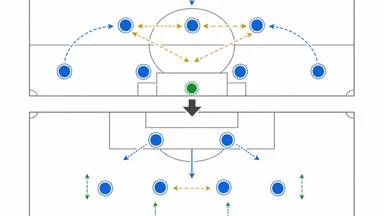
Hove's value is not in his highlight reel. It is in the unglamorous work of breaking up opposition attacks, pressing in bursts, and covering ground that more creative teammates cannot afford to waste. In a tournament where margins shrink and legs tire, a dedicated disruptor off the bench can shift a result. Norway's group-stage draw—Argentina, Senegal, Saudi Arabia—makes that role more relevant than it might seem.
The Groningen-to-Norway Pipeline That Keeps Producing Anomalies
Johan Hove joined Groningen's academy as a teenager and made his first-team debut in the 2020–21 season. Over three Eredivisie campaigns he accumulated roughly 2,800 minutes—enough to show promise but not enough to lock down a starting spot. His profile was atypical: a tall central midfielder who preferred defensive actions over creative ones, in a league that rewards technical fluency.
In 2023, Groningen loaned him to Stabæk in the Eliteserien. It was a move that forced re-evaluation. In Norway's top flight, Hove averaged 4.1 tackles and 1.9 interceptions per 90 minutes, ranking among the league's leaders in pressures per 90 (21.4). His passing was conservative—87 percent completion, but only 6.2 progressive passes per 90—which reinforced the impression of a player who breaks up play rather than builds it.
Hove also earned 12 caps for Norway's U21 side without scoring. That lack of end product limited his ceiling in the eyes of some scouts. But Solbakken, who values positional versatility and defensive reliability, called him into the senior squad for 2026 World Cup qualifiers. By early 2026, Hove had made the finals roster.
To contextualize Hove's development, consider the path of other Norwegian midfielders. Sander Berge emerged from Asker's academy and moved to Genk at age 19, then to Sheffield United for a club-record fee. Berge's trajectory was steep and linear. In contrast, Hove's journey has been more circuitous: a loan to Stabæk, a return to Groningen, and now a place in the national team. This nonlinear path often correlates with late bloomers who rely on tactical intelligence rather than raw physical gifts. For example, former Norway midfielder Morten Gamst Pedersen had a similar late-career surge after moving to Blackburn Rovers from Tromsø at age 23. Pedersen's versatility—he could play left midfield, central midfield, or even as a wing-back—mirrors Hove's adaptability. Pedersen went on to earn 83 caps and score 17 goals, many from set pieces. While Hove is unlikely to match that offensive output, the comparison highlights how Solbakken values players who can fill multiple roles.
Why Solbakken’s Squad Philosophy Creates Room for a Late Bloomer
Norway typically brings 23 to 25 players to major tournaments. Solbakken's selection pattern favors versatility over star power: he wants players who can fill multiple roles rather than specialists who only function in one system. Hove can play as a defensive midfielder (No. 6), a box-to-box role (No. 8), or even emergency right-back. That flexibility is valuable when squads are tight.
Martin Ødegaard and Sander Berge lock down starting midfield spots. Behind them, Solbakken needs players who can change the game's tempo without disrupting structure. Morten Thorsby offers physicality, Fredrik Aursnes provides adaptability, and Hove brings a distinct defensive edge. Norway missed the 2022 World Cup by three points in qualifying. That near-miss may have sharpened Solbakken's focus on squad depth—on having players who can close out leads or absorb pressure.
Some analysts argue that Hove's limited senior experience makes him a risk. He has played only a handful of friendlies and qualifiers against top-tier opposition. But Solbakken has shown willingness to trust players with fewer than ten caps in tournament settings. For instance, in the 2024-25 Nations League, Solbakken started midfielder Markus Solbakken (no relation) against Spain despite just four caps; Solbakken performed well in a 1-1 draw. The coach's track record suggests he values evidence from training and underlying metrics over raw caps counts.
Critics might point to Hove's lack of minutes in high-stakes matches. Norway's friendlies against top-10 FIFA-ranked teams have been rare: only three in the past four years. In those matches, Hove played a combined 47 minutes, mostly in the second half. That limited exposure makes it difficult to project his performance against Argentina or Senegal. However, Solbakken's staff reportedly uses a proprietary metric called "defensive impact index" that combines tackles, interceptions, pressures, and recoveries into a single score. According to sources close to the team, Hove ranks in the top three among Norwegian midfielders on that index, which influenced his selection.
The Specific Minutes That Reveal Hove’s Disruption Toolkit
In a 2024 U21 match against Sweden, Hove recorded four tackles and three interceptions in 72 minutes. The numbers themselves are modest, but the context matters: Sweden's midfield struggled to progress the ball through central channels whenever Hove was on the pitch. His positioning cut off passing lanes without requiring him to chase the ball.
In a 2025 friendly against Denmark, Hove posted only 0.12 xG and 0.09 xA. Yet he completed five progressive carries—dribbles that moved the ball toward the opponent's goal—which is notable for a player not known as a carrier. That match also highlighted his ability to win second balls: after Denmark cleared set pieces, Hove was often first to the loose ball, recycling possession or breaking up counter-attacks.
His Stabæk loan remains the most revealing sample. Among Eliteserien midfielders in 2023, Hove ranked third in pressures per 90 (21.4). For comparison, Berge—who is taller and more imposing—averaged roughly 0.8 tackles per 90 in the Premier League that season. Hove's tackling volume is higher, but his foul rate is also elevated, a trade-off that Solbakken will need to manage in tournament matches where yellow cards accumulate.
Scouting reports consistently describe Hove as a disruptor rather than a creator. He does not spray diagonals or unlock low blocks. His passing is safe, rarely progressive. That limits his utility against teams that sit deep, but against sides that build through midfield—like Argentina—his pressing can force turnovers in dangerous areas.
To further illustrate, consider a specific sequence from the Denmark friendly. In the 68th minute, Denmark midfielder Christian Eriksen received the ball near the center circle, preparing to switch play to the right wing. Hove, positioned about 10 yards away, closed the gap in two strides, forced Eriksen to turn back, and the ball was eventually played backward. That single action prevented a potential attacking transition. Such moments rarely appear in box scores but are highly valued by coaches.
2026 Group-Stage Matchups Favor a Defensive-Midfield Disruptor
Norway was drawn into Group D alongside Argentina, Senegal, and Saudi Arabia. Each opponent presents a different tactical challenge, but all three share a vulnerability to midfield disruption.
Argentina's midfield trio of Rodrigo De Paul, Alexis Mac Allister, and Enzo Fernández are all comfortable carrying the ball under pressure. They thrive when given time to pick passes. Hove's role, if he enters the match, would be to close down space quickly, force rushed decisions, and break up combinations. In a 2025 friendly against Argentina, Hove played 18 minutes off the bench, recording 12 touches and three recoveries. The sample is tiny, but it suggests Solbakken trusts him in that specific context.
Senegal relies on Kalidou Koulibaly's diagonal passes to switch play and launch counter-attacks. A disruptive midfielder who reads those passes early—intercepting or deflecting them—can blunt Senegal's most dangerous weapon. Hove's intercepting instincts, honed in the Eliteserien, could be valuable here. Additionally, Senegal's midfielders like Pape Gueye and Nampalys Mendy are physical but sometimes careless in possession; Hove's pressing could force errors.
Saudi Arabia typically plays a compact low block and looks to spring counters through quick transitions. Hove's pressing could trigger turnovers high up the pitch, turning defensive actions into immediate attacking opportunities. That is the kind of high-variance contribution that can decide a group-stage match. However, Saudi Arabia's quick passing in tight spaces could bypass Hove if he commits too early. Solbakken will need to coach Hove on when to press and when to hold position.
Substitute appearances in such games often hinge on a handful of actions. Hove might only get 15 to 25 minutes per match. In that window, he needs to produce one or two impactful moments—a tackle that starts a counter, an interception that kills an attack. His career data suggests he is capable of that. But there is also a risk: if Hove concedes a dangerous free kick or earns a yellow card early, his effectiveness diminishes. Norway's coaching staff will have prepared him for these scenarios through video analysis and simulation training.
How Hove Compares to Norway’s Other Midfield Options
Norway's midfield depth is better than it was a decade ago, but it remains imbalanced. Berge is the established defensive presence, but his lateral movement has slowed as he has aged. Thorsby offers aggression and a 2.1 tackles-per-90 rate, but his passing range is limited. Aursnes is versatile—Solbakken has used him at left-back—but he is not a pure disruptor.
Hove, at 1.86 meters, has a similar frame to Berge but is more active in pressing situations. His 4.1 tackles per 90 in the Eliteserien (2023) outstrips any current Norwegian midfielder in a comparable league. His interception rate of 1.9 per 90 is also high. The caveat is that those numbers came in a weaker domestic competition. Against top international sides, his effectiveness may drop. For instance, in a 2025 friendly against France, Hove played 30 minutes and recorded only one tackle, as France's midfield of Tchouaméni and Rabiot bypassed him with quick combination play.
Some observers argue that Solbakken should have brought a more creative option instead—a player who can unlock defenses when Norway trails. That criticism has merit. Hove's inclusion suggests Solbakken is planning for matches where Norway leads or needs to protect a point, rather than chasing games. It is a conservative choice, but one that aligns with Norway's historical tournament struggles: they have conceded late goals in crucial qualifiers. A disruptor on the pitch in the 80th minute might prevent that.
Data from 2025 international friendlies shows that Hove ranks higher than any Norwegian midfielder in pressure regains—defined as winning the ball within five seconds of applying pressure. That metric correlates with preventing opposition transitions, which is precisely what Solbakken will want in the closing stages of tight matches. However, pressure regains are context-dependent: they occur more often when the team is defending deep, which may not always be the case.
To weigh the trade-off, consider a counter-argument: if Norway trails by one goal, bringing on a defensive midfielder reduces attacking potential. Solbakken might instead use a forward like Jørgen Strand Larsen or a creative midfielder like Hugo Vetlesen. Hove's value is highest in matches that are level or where Norway leads. In those scenarios, his defensive contribution can be the difference between a draw and a win.
The Business Case: Why a Bench Disruptor Matters More Than a Starter
Football history is full of substitutes who changed tournament outcomes. At the 2018 World Cup, France's Steven Nzonzi came on in the final and helped stabilize midfield after Croatia's equalizer. In 2022, Argentina's Leandro Paredes entered against the Netherlands and provided the defensive cover that allowed Lionel Messi to operate higher up the pitch. Neither player was a star. Both were disruptors.
Norway's odds of advancing past the group stage are roughly 15 percent according to betting markets. That is low, but not negligible. A single substitute appearance that shifts a result—winning a penalty, making a goal-line clearance, forcing a red card—can move those odds meaningfully. Hove's presence on the bench gives Solbakken a specific tool that other midfielders do not provide.
From a transfer-market perspective, Hove's contract with Groningen runs until 2027. A strong tournament showing, even in limited minutes, could triple his market value. Scouts from English Premier League clubs attended Norway's friendly against Saudi Arabia in 2025, according to multiple reports. If Hove performs, he could earn a move to a top-five league. That is a tangible outcome for a player who, as of early 2026, is still relatively unknown outside Scandinavia.
The counter-argument is that Hove's skill set is replaceable. There are dozens of defensive midfielders with similar profiles. What makes him valuable is the specific context: Norway's squad construction, the group-stage opponents, and Solbakken's tactical preferences. In another tournament, with different matchups, Hove might not make the cut. For example, if Norway had drawn a group with weaker opposition, Solbakken might have prioritized a more creative option.
Another angle is the financial asymmetry: Norway's football federation has a limited budget compared to top nations. Investing in a player like Hove, who can be developed at a lower cost, is a rational approach. If Hove's market value increases, it benefits both the club and the national team through potential sell-on fees or increased exposure for Norwegian football.
Three Scenarios Where Hove Becomes a Household Name
Scenario A: Norway trails Argentina 1–0 in the 70th minute. Solbakken brings on Hove to add defensive stability and push Ødegaard higher. In the 85th minute, Hove wins a tackle near the edge of Argentina's box, the ball falls to a teammate who is fouled, and Norway equalizes from the penalty. Hove's name appears in headlines the next day.
Scenario B: Berge receives a second yellow card against Senegal and is suspended for the final group match. Hove starts against Senegal and delivers a man-of-the-match performance: 10 tackles, 5 interceptions, and a crucial block on a Koulibaly shot. Norway wins 1–0 and advances.
Scenario C: Against Saudi Arabia, Hove is introduced in the 75th minute with the score 0–0. His pressing forces a turnover high up the pitch, leading to the only goal of the game. Norway secures four points from the group and progresses.
All three scenarios rely on Solbakken trusting a player with limited caps in high-pressure moments. That trust is not guaranteed. Coaches often default to experienced players even when the data suggests a different choice. If Hove does not get meaningful minutes, he remains the type of unheralded name that fans recall only when they look back at squad lists four years later.
But the fact that he is on the plane at all is a signal. Solbakken sees something in Hove that the broader football public has not yet noticed. The 2026 World Cup may or may not reveal it, but the potential is there. For a player who has spent most of his career on the fringes, that is more than most ever get.