Arena Size Variance Reshapes 2026 Stadium Atmosphere Planning
The 2026 FIFA World Cup will be the first to span three nations, with 16 stadiums ranging from the intimate 40,000-seat BC Place in Vancouver to the cavernous AT&T Stadium in Arlington, which can hold over 100,000. This extreme variance in capacity, roof coverage, and pitch dimensions forces planners to rethink every aspect of match-day atmosphere. No two venues will feel the same, and the tournament's success may hinge on how well organizers adapt to each stadium's unique characteristics.
Stadium Capacity Disparity Creates Tactical Headache
The 2026 tournament uses 16 venues across three countries, with capacities that vary by a factor of more than two. AT&T Stadium in Arlington seats roughly 80,000 for football, while Arrowhead Stadium in Kansas City holds about 76,000. At the lower end, BC Place in Vancouver has a permanent capacity of around 54,500, and Estadio Akron in Guadalajara holds about 49,000. This disparity means that a group-stage match in Vancouver could have a dramatically different feel from a knockout game in Dallas.
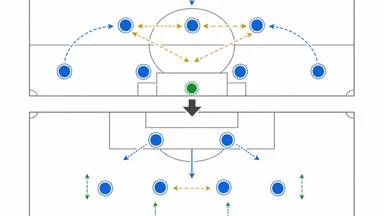
Pitch dimensions also vary significantly by venue. FIFA allows lengths between 100 and 110 meters and widths from 64 to 75 meters. Estadio BBVA in Monterrey uses a relatively narrow 68-meter width, which tends to favor defensive compactness and central play. In contrast, SoFi Stadium in Los Angeles offers a wider 75-meter field, benefiting wing play and stretching defenses. Coaches must adjust their pressing triggers and tactical setups depending on the venue, adding an extra layer of preparation for teams that advance through the tournament.
The capacity range also affects ticket pricing and availability. Matches at larger venues like MetLife Stadium in New Jersey (82,500 capacity) can accommodate more fans, potentially lowering secondary-market prices. However, smaller venues like BC Place create scarcity, which may drive up demand and prices for high-profile group matches. FIFA's pricing tiers typically reflect these differences, but the secondary market often tells a different story. For example, during the 2014 World Cup, tickets for matches at the smaller Arena da Baixada in Curitiba commanded premiums of up to 40% above face value on resale platforms, while larger venues like Maracanã saw discounts for less popular group games. This dynamic will likely repeat in 2026, with scalpers targeting high-demand matches at low-capacity stadiums.
Acoustic Modeling Shows Attendance Amplifies Atmosphere
Research from previous tournaments shows that crowd noise correlates strongly with roof coverage. The 2022 final at Lusail Stadium in Qatar, with its fully enclosed design and capacity of 88,966, set decibel records that were measured at levels comparable to a jet engine at close range. Studies commissioned by FIFA indicate that closed-roof venues can amplify crowd noise by roughly 15% compared to open-air stadiums, because sound reflects off the roof and walls rather than dissipating into the sky.
Mercedes-Benz Stadium in Atlanta, which has a retractable roof, is expected to be one of the loudest venues in 2026. Its roof can be closed to trap sound, and the stadium's bowl design concentrates noise toward the pitch. In contrast, open-air venues like MetLife Stadium or Levi's Stadium in Santa Clara lose crowd energy because sound escapes upward. Broadcasters have noted that matches in open stadiums often sound flatter on television, which can affect the viewing experience for millions of fans at home.
Some planners argue that the atmosphere depends less on roof design and more on the match context and fan culture. A passionate crowd in an open stadium can still generate impressive noise, as seen during the 2014 World Cup in Brazil. However, acoustic modeling suggests that even the most enthusiastic fans face a physical ceiling in open venues. For the 2026 tournament, FIFA may schedule high-stakes knockout matches in roofed stadiums to maximize the broadcast atmosphere, leaving group-stage games in open venues. This trade-off could be controversial: fans in open stadiums might feel shortchanged if they perceive that the most exciting matches are reserved for domed venues. Conversely, broadcasters argue that the global audience benefits from a more electric soundscape, which could boost viewership and ad revenue.
Another factor is the shape of the stadium bowl. Venues with steep, enclosed stands, such as the Estadio Azteca in Mexico City, naturally concentrate sound more than shallow, spread-out designs. The Azteca's bowl is known for its intimidating atmosphere, partly due to its steep sides and partial roof. In contrast, newer venues like SoFi Stadium have a more open feel, which can dilute crowd noise. Planners might consider leveraging these natural acoustic differences by assigning passionate fan bases to venues that amplify their energy, but such decisions would require careful coordination with team allocations.
Seat Color Psychology Influences Television Perception
The color of stadium seats can subtly influence how full the stands appear on television. Estadio Nacional in Mexico City uses blue seats, which tend to blend with the crowd and make empty rows less noticeable. Dark colors absorb light, making the crowd look fuller, while light colors reflect light and can highlight empty seats. SoFi Stadium employs white seats partly to reflect heat in the Southern California sun, but this can make sparse sections more visible during less popular matches.
Broadcasters adjust camera angles to minimize the appearance of empty rows, especially during group-stage matches when attendance may be lower. For the 2014 World Cup, Maracanã Stadium's seat pattern—a mix of blue and white—was designed to hide gaps when the upper tiers were sparsely filled. In 2026, with capacities varying so widely, some venues may have large sections that are difficult to sell out for early matches, making seat color a more important consideration than usual.
Some experts argue that seat color psychology is overblown, and that a passionate crowd will always look good on television regardless of seat hue. However, tournament organizers have invested in seat patterns for decades, suggesting they believe it matters. For 2026, the mix of old and new stadiums means some venues will have legacy seat colors that cannot be easily changed, while newly built or renovated venues can optimize their palette. For instance, the recently renovated Estadio Akron in Guadalajara features a dark blue and red pattern that is designed to mask empty seats, while the older Estadio Universitario in Monterrey has lighter gray seats that may require more careful camera work. Broadcasters may need to adapt their production plans on a venue-by-venue basis, using robotic cameras and strategic angles to present the best possible image.
Logistics of Temporary Seating Alter Fan Experience
FIFA mandates a minimum capacity of 40,000 for group-stage matches, 60,000 for semi-finals, and 80,000 for the final. Some venues, like BC Place, will add temporary seating to meet these thresholds. BC Place's permanent capacity is roughly 54,500, but it will add around 5,000 temporary seats for the tournament. These temporary sections often have obstructed views, as they are placed over running tracks or in corners, and they may lack the amenities of permanent seating.
Concession sales per seat in temporary sections can be roughly 20% lower than in permanent areas, according to industry reports, because temporary infrastructure often has limited food and beverage outlets. Fans in these sections may face longer lines and fewer options, which can sour the experience. Vendors must plan for these inefficiencies, sometimes pre-ordering food or using mobile ordering to mitigate the problem. For example, during the 2015 Rugby World Cup, temporary seating at Twickenham saw concession revenue drop by nearly 25% compared to permanent sections, prompting organizers to invest in portable kiosks and express lanes for subsequent events.
On the positive side, temporary seating can be configured to create a more intimate feel in large stadiums. By covering the lower bowl only and blocking off upper tiers, organizers can concentrate fans closer to the pitch, improving sightlines and atmosphere. However, this approach reduces total capacity and may not be feasible for high-demand matches. The trade-off between capacity and experience is a constant tension in tournament planning. For 2026, FIFA could adopt a tiered approach: for low-demand group matches, they might close upper tiers and use only the lower bowl with temporary seating to enhance atmosphere, while for high-demand knockout matches, they would open the full stadium. This flexible strategy would require modular seating systems that can be quickly installed or removed, adding to logistical complexity but potentially improving fan satisfaction.
Climate-Controlled Venues Shift Game Scheduling
Six of the 16 venues have retractable roofs, including Mercedes-Benz Stadium in Atlanta, AT&T Stadium in Arlington, and SoFi Stadium in Los Angeles. Dome venues allow noon kickoffs even in hot climates, because the roof can be closed to maintain a comfortable temperature. FIFA estimates that roof use can reduce the heat index by roughly 10 degrees Fahrenheit, making early afternoon matches feasible in places like Dallas, where summer temperatures often exceed 100 degrees Fahrenheit.
Outdoor stadiums in hot regions, such as the Estadio Universitario in Monterrey, limit early slot options. Broadcasters prefer roof-closed venues for consistent lighting, as natural shadows can shift during a match and affect camera exposure. In open stadiums, broadcasters must adjust camera settings throughout the game, which adds complexity and cost. For the 2026 tournament, FIFA may schedule afternoon matches primarily in roofed venues, reserving outdoor stadiums for evening kickoffs when temperatures are lower.
Not all teams welcome the climate control, however. Some players prefer natural conditions, arguing that artificial cooling can dry the air and affect breathing. Coaches may also adjust hydration strategies based on whether a match is in a dome or open air. The scheduling committee must balance broadcast preferences, player comfort, and fan experience, which is no small task across 16 venues with vastly different climates. A potential compromise is to use roofed venues for early matches but leave the roof open when weather permits, giving teams some exposure to natural conditions while retaining the option to close it if temperatures spike. This hybrid approach has been used successfully in venues like the Mercedes-Benz Stadium, where the roof is often open for evening events but closed for daytime games in summer.
Pitch Dimensions Vary Across Host Cities
FIFA allows pitch lengths between 100 and 110 meters and widths from 64 to 75 meters. This range gives host stadiums some flexibility, but it also means that teams may face different playing surfaces from match to match. Estadio BBVA in Monterrey uses a narrow 68-meter width, which tends to favor defensive compactness and central play. Teams that rely on width, such as those with strong wingers, may struggle on narrower pitches.
SoFi Stadium offers a wider 75-meter field, which benefits wing play and stretching defenses. Coaches must adjust their pressing triggers and tactical setups depending on the venue. For example, a high-pressing team may need to adjust its triggers on a wider pitch because the distances between players are larger. Similarly, a team that builds through the middle may find more space on a narrow pitch, but less room for diagonal switches.
Pitch quality also varies by venue. Some stadiums use natural grass, while others use artificial turf or hybrid systems. The 2026 tournament will primarily use natural grass, but some venues, like AT&T Stadium, have a natural grass field that is rolled in for matches. The grass can be inconsistent in terms of grip and ball roll, affecting passing and dribbling. Teams may need to train on similar surfaces before matches to adapt.
The combination of pitch dimensions and surface type adds a layer of complexity that is often overlooked in tournament planning. Some analysts argue that the best teams will adapt regardless, but history shows that venue-specific factors can influence outcomes. For instance, the 2010 World Cup in South Africa saw several upsets attributed to altitude and pitch conditions. In 2026, teams that advance deep into the tournament may face a gauntlet of different playing surfaces, from the narrow artificial turf of Estadio BBVA to the wide natural grass of SoFi Stadium. Coaches and sports scientists will need to prepare players for these transitions, possibly adjusting training regimens and even match strategies based on the next venue.
Legacy Planning Drives Seating Reductions Post-Tournament
After the 2026 World Cup, several venues plan to reduce their capacities to better suit local demand. Jeju World Cup Stadium, built for the 2002 tournament, originally held 42,000 but later removed temporary seating to bring capacity down to roughly 29,000. This pattern is common: stadiums built for mega-events often end up with excess capacity that is costly to maintain. Seattle's Lumen Field will remove upper tiers after 2026, and Vancouver plans to revert BC Place to around 50,000 seats.
The cost of removing and reconfiguring seating averages roughly $15 per seat removed, according to industry estimates. This includes labor, structural modifications, and sometimes the addition of new amenities. Retrofits aim for a capacity in the 25,000 to 40,000 range, which is considered optimal for most club and domestic competitions. However, the process can take months and may disrupt local sporting calendars.
Some argue that the temporary seating added for the World Cup should be designed from the start for easy removal, with modular components that can be reused elsewhere. This approach was used in Brazil for some venues, but not all. For 2026, organizers have emphasized sustainability, but the pressure to create a spectacular tournament often outweighs long-term planning. The legacy of these stadiums will be determined by how well they serve their communities after the final whistle. For example, after the 2014 World Cup, the Arena das Dunas in Natal was converted into a multi-purpose venue with a reduced capacity of 32,000, hosting concerts and local football matches. Similar plans are in place for several 2026 venues, but the success of these conversions depends on local demand and ongoing maintenance costs.
Ultimately, the 2026 World Cup's stadium variance is both a challenge and an opportunity. The diversity of venues will give each match a unique character, but it also demands meticulous planning from FIFA, broadcasters, and teams. Whether the tournament feels cohesive or disjointed may depend on how well these differences are managed. The evidence from previous tournaments suggests that attention to detail—from seat color to roof design—can make a meaningful difference in the fan experience, both in the stands and on screen.