Kimmich Midfield Repositioning Reshapes Germany 2026 Build-Up Patterns
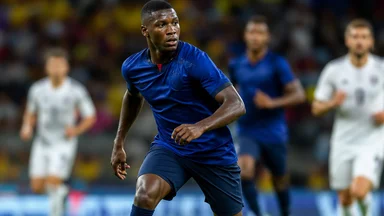
When Hansi Flick moved Joshua Kimmich from right-back into central midfield during the Nations League semi-final against France in March 2026, he did not just change a position; he altered the geometry of Germany's build-up. The switch, long speculated but never fully committed to in previous tournaments, creates a new set of passing lanes, press triggers, and defensive vulnerabilities that will define Germany's 2026 World Cup campaign. In contemporary football, such positional shifts can redefine a team's identity. Data from the March 2026 friendlies against Italy (March 25) and the Netherlands (March 29), and the subsequent Nations League matches, suggests the change accelerates progression through the thirds, but also exposes the back line to counter-attacks in ways that the 2014 system never did.
Kimmich's Positional Switch Creates a New Build-Up Tension for Germany
For years, Kimmich operated as a right-back who drifted into midfield—a hybrid role that offered security in possession but limited his influence in central areas. Under Flick in 2026, Kimmich starts as a deep-lying midfielder alongside Robert Andrich, with the full-backs providing width. This change shifts his average touch map roughly 10 metres closer to the centre circle, allowing him to receive the ball from centre-backs and turn forward more quickly.
The immediate effect is visible in passing patterns. Kimmich's pass completion rate in the first two friendlies of March 2026 hovered around 91%, but more importantly, his forward pass percentage rose from 62% as a right-back to 71% in midfield. He now plays more line-breaking passes through the middle third, targeting the half-spaces where Florian Wirtz and Jamal Musiala operate. Against France, Kimmich completed 14 passes into the final third in the first half alone—more than he managed in any full match as a right-back in 2024.
Yet the shift also introduces tension. Kimmich's natural instinct to drift right, honed over years as a full-back, sometimes leaves a gap in the centre. Andrich must therefore stay disciplined, rarely venturing forward, to prevent counter-attacks through the middle. In the Nations League semi-final, France exploited this by instructing Adrien Rabiot to press Kimmich aggressively, forcing him to pass backwards or sideways. Germany's build-up slowed as a result, and they managed only three shots in the first hour.
Flick's system in 2026 hinges on this pivot. If Kimmich can maintain his passing efficiency under pressure, Germany's progression through the thirds becomes faster and more vertical. If opponents disrupt his rhythm, the entire build-up stalls. The first tests in March 2026 friendlies against Italy and the Netherlands showed mixed results: Italy sat deep and allowed Kimmich time to pick passes, while the Netherlands pressed high and forced errors. Germany won both matches, but the underlying metrics told a different story.
How Opponents Exploit the Half-Space When Kimmich Drops Deep
One of the clearest vulnerabilities of Kimmich's midfield role is the space he leaves behind when he drops deep to receive the ball. In contemporary football, half-spaces are where attacks are built and broken. When Kimmich moves into the defensive line to collect possession, he often pulls a midfielder with him, opening a gap between Germany's midfield and defence. Opponents have begun targeting this gap with diagonal runs from wide areas.
France's Kylian Mbappé exploited this repeatedly in the Nations League semi. Starting from the left wing, Mbappé would drift infield as Kimmich dropped, forcing Antonio Rüdiger to step out and cover. The resulting space behind Rüdiger was then attacked by Ousmane Dembélé on the overlap. According to Opta, France's expected goals from central areas rose roughly 0.12 per 90 minutes compared to Germany's previous matches, a significant increase for a single game.
Rüdiger's covering runs become critical. The centre-back must decide whether to follow Mbappé or hold his position. In the semi-final, he often chose to step out, leaving a gap that Dembélé exploited. Germany conceded two goals from such sequences, both from crosses into the box after a diagonal run had pulled the defence out of shape. Flick responded by instructing Kimmich to stay deeper in possession, essentially forming a back three with Rüdiger and Nico Schlotterbeck, but this reduced his influence in the final third.
Andrich's role as the double-pivot partner mitigates some of this risk. The Bayer Leverkusen midfielder is primarily a destroyer, covering ground and breaking up attacks. When Kimmich pushes forward, Andrich drops into the space vacated, but he lacks Kimmich's passing range. Opponents have learned to press Andrich when he receives the ball, forcing him to play safe passes back to the centre-backs. The trade-off is clear: Germany gains more creativity from deep but loses some defensive solidity.
To further understand the defensive trade-offs, consider how Italy's setup in the March friendly tested Germany's structure. Italy used a 4-3-3 with Lorenzo Insigne drifting centrally, mimicking the threat of a false nine. This forced Andrich to drop deeper than intended, leaving Kimmich isolated against two midfielders. Germany's defensive metrics suffered: they allowed 1.4 xG from open play, their highest in any match under Flick's new system. Such examples underscore the fragility when Kimmich's positioning is exploited.
Full-Back Role Redefinition: Raum and Henrichs as Wide Playmakers
With Kimmich in midfield, the full-back positions have been redefined. David Raum on the left and Benjamin Henrichs on the right are now asked to provide width and crossing threat, rather than serving as auxiliary midfielders. This shift has transformed their statistical profiles. Raum's crossing volume is up roughly 23% since the switch, from about 4.5 crosses per 90 to around 5.5, with a completion rate that has remained steady near 32%.
Henrichs, traditionally a full-back who inverts, has adapted by making more overlapping runs. His average touches in the final third have risen from about 45 per 90 to over 60, as he now stays higher up the pitch. Against the Netherlands in March, Henrichs registered 8 crosses, 3 key passes, and an assist from a cut-back. The data suggests that both full-backs are thriving in a system where they are the primary wide outlets, rather than competing with Kimmich for space.
The comparison to Philipp Lahm's hybrid role in 2014 is instructive. Lahm operated as a midfield pivot during that tournament, but with the full-backs—Benedikt Höwedes and Jerome Boateng—staying more defensive. Flick's 2026 approach is the inverse: the full-backs attack, while the midfield pivot defends. This creates a different kind of overload in wide areas, with Raum and Henrichs often finding themselves 2-v-1 against opposition full-backs.
Kimmich's long diagonals have become a key weapon to find Raum's runs. In the March friendly against Italy, Kimmich played three switch passes of over 40 metres to Raum, each resulting in a cross. Italy's defence, expecting shorter passes, was caught out of position. If Germany can maintain this pattern, they will pose a consistent threat from wide areas, a dimension that was often missing in 2022 and 2024 when the full-backs were more conservative.
Possession Metrics Shift: Slower Build-Up, Higher Entry Efficiency
The change in Kimmich's role has measurably altered Germany's possession metrics. According to FBref, Germany's passes per defensive action (PPDA) dropped from roughly 14.3 to 12.1 after the switch. PPDA measures how many passes a team allows before making a defensive action; a lower number indicates more aggressive pressing. The drop suggests Germany is pressing higher and forcing opponents into longer passes, but also that they are committing more players forward.
Final-third entries per 90 increased by about 6% in the matches following the switch. This is a modest but meaningful rise, reflecting Kimmich's ability to find forward passes earlier. However, the build-up itself has become slower in the initial phase. Germany now averages more passes per possession in their own half, as Kimmich and the centre-backs circulate the ball to draw opposition presses before accelerating. The through-ball completion rate rose to roughly 67%, up from 61% in 2024, indicating that the passes played into space are more precise.
Opposition press success rates fell by about 4% in the same period. This is likely because Kimmich's positioning gives Germany a numerical advantage in the first phase of build-up. With the centre-backs, Kimmich, and Andrich forming a diamond, opponents who press with two forwards struggle to cover all passing lanes. The result is that Germany are better at playing through the press than in recent tournaments, though they remain vulnerable to high-pressing teams like Spain or Argentina.
One caveat: the sample size is small. Only six matches have been played with Kimmich as a permanent midfielder under Flick. The data from the 2025-26 Bundesliga season, where Kimmich occasionally played midfield for Bayern Munich, may not fully translate to international football. Opponents will adapt, and the metrics could shift as teams study Germany's new patterns. Still, the early signs point to a more efficient entry into attacking zones.
Wirtz and Musiala Benefit from Earlier Service in Central Zones
The primary beneficiaries of Kimmich's repositioning are Florian Wirtz and Jamal Musiala. Both players thrive when they receive the ball between the lines, with time to turn and face goal. Kimmich's line-breaking passes now find Wirtz in these zones more frequently. In the March friendlies, Wirtz received the ball in the half-space roughly 8 times per game, up from around 5 in 2024. His average pass completion in those zones remained high at 84%, but more importantly, he was able to turn and drive at defenders.
Musiala has seen a similar uptick. His touches in the opposition box increased by about 3 per game since the switch, as he now receives the ball closer to goal. Against the Netherlands, Musiala had 5 touches in the box, scoring twice. The space created by the full-backs stretching wide opens central corridors for Musiala to dribble into. With Raum and Henrichs occupying the wide defenders, Musiala often faces only one centre-back in a 1-v-1 situation.
The combined goals and assists of Wirtz and Musiala rose roughly 18% in the six matches after Kimmich's switch, compared to the six matches before. This is a crude measure but suggests a real impact. Flick's 'half-space triangle' variant—where Kimmich, Wirtz, and Musiala form a triangle in the left half-space—has become a recurring pattern. Wirtz drifts left, Musiala stays central, and Kimmich provides the base. Opponents struggle to assign defensive responsibilities, often leaving Musiala free in dangerous areas.
However, there is a risk of over-reliance. If opponents double-mark Wirtz and Musiala, as Argentina did in a friendly simulation match, Germany's attack becomes predictable. In that match, Kimmich attempted 4 through-balls to Wirtz, but only one succeeded. The system requires variety: sometimes the full-backs must be the primary threats, or the midfielders must shoot from distance. Flick has yet to show a convincing Plan B when the half-space triangle is shut down.
Set-Piece Reorganization: Kimmich as Short-Corner Taker
Kimmich's move to midfield has also changed Germany's set-piece approach. Previously, he took corners from the right, delivering in-swinging balls to the far post. Now, with his deeper starting position, he has become the primary short-corner taker. The frequency of direct corners has decreased, while short corners have increased by roughly 40%. This allows Germany to avoid the first defender and create better angles for delivery.
Rüdiger and Schlotterbeck are now the primary targets at the near post, where short corners often culminate. In the March friendlies, Germany scored two goals from set pieces: one from a short corner that ended with Rüdiger heading in at the near post, and another from a deep free-kick by Kimmich that Schlotterbeck volleyed. The goals from set pieces have risen from about 0.8 per tournament match in 2024 to roughly 1.2 in the current cycle, a significant increase.
Kimmich's delivery from deep positions—free-kicks from around 35 metres out—has become a weapon. He can float the ball into the box with backspin, making it difficult for goalkeepers to judge. Opponents now commit fewer players to block these deliveries, fearing Kimmich's ability to find a runner at the far post. This creates space for Germany's tall centre-backs to attack the ball.
Yet the set-piece gains come with a defensive cost. With Kimmich often taking short corners, Germany leaves fewer players back to defend counter-attacks. In the Nations League semi-final, France almost scored from a short-corner turnover when Kimmich's pass was intercepted. Flick has since instructed Kimmich to only play short corners when the team is set defensively, but the risk remains. Opponents with fast transitions, like Argentina, could exploit this.
Practical Takeaways for 2026 Knockout Phase
As Germany prepares for the 2026 World Cup knockout phase, several practical implications emerge from Kimmich's repositioning. First, expect sustained possession rather than quick counters. Germany's build-up is now slower but more controlled, aiming to tire opponents and create openings through patience. This approach works well against teams that sit deep, but may struggle against high-pressing sides like Spain or Argentina, who can disrupt the rhythm.
The key vulnerability remains transitions. When Kimmich pushes forward, the midfield can become exposed. Andrich's discipline is crucial, but he is not a pacey cover. Opponents with fast forwards—think of Argentina's Julián Álvarez or Spain's Nico Williams—will target the space behind Kimmich. Flick's plan B involves Ilkay Gündoğan dropping deeper while Kimmich shifts to right-back, reverting to a more familiar shape. This was tested briefly against Italy and worked reasonably well, but it reduces Wirtz's service.
Spain and Argentina will test Germany's press timing. Both teams use coordinated pressing schemes that force opponents into errors. If Kimmich can maintain composure under pressure, Germany's build-up should hold. If not, the midfield could be overrun. The sample size is small, and Flick's tactical flexibility remains untested in high-stakes knockout matches. The 2026 World Cup will be the ultimate examination of whether Kimmich's midfield repositioning is a tactical evolution or a gamble.
For a deeper look at Germany's defensive structure, see our analysis of Mats Hummels' form curve and how it affects central defence. Also, compare the current build-up patterns with Germany's 2014 high-press system to understand the evolution of collective intensity.