Iceland Recycles Set-Piece Patterns from 2018 for 2026 Group Push
In the 2018 World Cup, Iceland's debut on the global stage was defined by discipline, organisation, and a ruthless efficiency from set pieces. Long throws against Argentina unsettled Lionel Messi's side, corner-kick patterns against Croatia created danger, and Gylfi Sigurðsson's delivery from wide areas became a primary attacking route. Fast-forward to 2026, and the same tactical DNA is being revived, updated, and weaponised for another group-stage challenge. Iceland's path to the tournament has been paved with 12 set-piece goals in 10 qualifiers, a figure that places them among Europe's most dangerous dead-ball teams. As they prepare to face Brazil, Morocco, and South Korea in Group D, the question is whether a focused set-piece strategy can once again punch above their weight.
The 2018 Blueprint Revisited
Iceland's 1–1 draw with Argentina in their first World Cup match showed how Iceland's set-piece discipline could unsettle a star-studded team. The equaliser came from a long throw-in launched into the box, causing chaos that led to an own goal. That routine—a simple but precisely executed launch from the sideline—was not an accident; it was the product of hours of rehearsal and a clear understanding of opponent vulnerabilities. Against Croatia, Iceland scored from a corner when Alfreð Finnbogason attacked the near post and diverted a Sigurðsson cross into the net. Those patterns were not one-offs but part of a coherent system.
In the 2018 group stage, roughly 38% of Iceland's total xG came from set pieces, according to available match data. That share was among the highest in the tournament. Sigurðsson's delivery zone—typically from the right flank, curling in with his left foot—created a predictable but hard-to-defend threat. Finnbogason's near-post runs forced defenders to make snap decisions, often leading to deflections or second-phase opportunities. The system relied on repetition and trust, with players knowing each other's movements after years of playing together. In 2026, the principles remain: target the near post on corners, use long throws as a weapon, and vary delivery to keep opponents guessing. Decoy runners have become a staple of training: on a typical corner, two players make near-post runs while a third drifts to the far post, and a fourth loiters at the edge of the box for a cutback. This overloads one area, then quickly switches the point of attack.
The current squad has studied footage of those 2018 matches and incorporated similar movements into their training ground routines. As former Iceland midfielder Jón Daði Böðvarsson noted, the patterns are “familiar but not stale,” because the opposition will have to prepare for something they have seen before but still struggle to stop.
Qualifying Numbers Tell a Story
Iceland's qualifying campaign for the 2026 World Cup was not built on flowing open-play moves. Instead, they ground out results through a combination of defensive solidity and set-piece efficiency. Of the 18 goals they scored in 10 matches, 12 came from dead-ball situations: 5 from corners, 4 from free kicks, and 3 from throw-ins. Their set-piece xG per 90 minutes was roughly 0.52, placing them in the top 8% of European national teams during that qualification window. Only 2 goals were conceded from set pieces across the entire campaign, highlighting a dual strength in both scoring and preventing.
The numbers become more striking when broken down by opponent quality. Against teams ranked in the top 50 by FIFA at the time—such as Slovakia and Romania—Iceland managed only 2 open-play goals but scored 5 from set pieces. This pattern suggests a deliberate tactical choice: conserve energy in open play, frustrate opponents, and strike from dead balls. The approach is not glamorous, but it is effective. Critics argue that such reliance is fragile, because a single missed routine or a referee who blows for fewer fouls can derail a match. Yet the data shows that Iceland's set-piece conversion rate in qualifying was around 12%, which is above the European average of roughly 8%.
One notable feature was the variety of delivery. Left-footed inswingers from Hákon Haraldsson, right-footed outswingers from Andri Guðjohnsen, and short-corner variations kept defences guessing. Against more organised blocks, Iceland used decoy runs to create space for a flick-on at the near post. The throw-in goals often came from a simple launch into the box, with a target man flicking the ball into the path of a midfielder arriving late. These patterns are not revolutionary, but they are executed with a precision that comes from repeated practice. As of early 2026, set-piece coach Jón Daði Böðvarsson reported that the team had rehearsed over 40 different routines in training, with a success rate of roughly 40% in practice matches.
Personnel Continuity as a Weapon
One reason Iceland's set-piece system remains effective is the continuity of its core group. Goalkeeper Rúnar Alex Rúnarsson and centre-back Sverrir Ingi Ingason, who replaced the retired Kári Árnason, are part of a defensive unit that has been together for multiple cycles. The understanding between the goalkeeper and his defenders on corner kicks—who picks up whom, when to step out—is honed over years. Head coach Arnar Viðarsson, who took over after the 2022 cycle, retained the set-piece structure from previous regimes, recognising that wholesale changes would disrupt a proven strength.
The most significant change is in the delivery personnel. With Sigurðsson gone, Haraldsson and Guðjohnsen have stepped into the role of primary takers. Haraldsson, a left-footed winger who plays his club football in Belgium, has developed a reputation for curling deliveries that dip late, making them difficult for goalkeepers to read. Guðjohnsen, son of former Chelsea striker Eiður Guðjohnsen, offers a right-footed option and has shown an ability to pick out the near post with consistency. Both players were part of the 2022 qualifying campaign and have been integrated into the set-piece unit gradually.
Perhaps the most important figure is set-piece coach Jón Daði Böðvarsson, a former Iceland international who played in the 2018 World Cup. Böðvarsson works with the squad on a part-time basis, but his influence is evident. He brings firsthand experience of what works at the highest level and has built a library of opponents' defensive setups. In the lead-up to the 2026 tournament, he has been studying Brazil's vulnerability to near-post corners, Morocco's zonal marking system, and South Korea's tendency to leave the back post unguarded on inswinging deliveries. This research-driven approach turns set pieces into a tailored weapon rather than a generic one.
2026 Group Opponents' Weaknesses
Group D presents a mix of challenges, but also clear opportunities for a set-piece-oriented team. Brazil, despite their attacking flair, conceded 4 set-piece goals in the 2022 World Cup, including a header from a corner against Croatia in the quarter-finals. Their defensive organisation on dead balls has been a recurring weakness, with players often ball-watching rather than tracking runners. Iceland's coaching staff have identified this as a key area to exploit. For example, Brazil's zonal marking system often leaves the near post unguarded, a gap Iceland's near-post flick can exploit. If they can force a few corners or free kicks in dangerous areas, the probability of a goal is higher than against most opponents.
Morocco, who reached the semi-finals in 2022, rely on a zonal marking system that is generally effective but has a known vulnerability: near-post flicks. Against Portugal, a flick-on from a corner almost led to a goal, and against Spain, a similar routine caused panic in the box. Iceland's near-post runs, honed over years, could be the exact tactic to break Morocco's shape. The key is to get the delivery right—low and driven, rather than floated—and to have a runner attack the ball before the zonal defenders can react. Additionally, Morocco's goalkeeper, Yassine Bounou, tends to stay on his line on corners, creating space for a well-placed header.
South Korea, the fourth team in the group, conceded 2 goals from inswinging corners during their Asian qualifying campaign. Their defensive line tends to drop deep, inviting pressure, and their marking on set pieces has been described as “loose” by analysts. Iceland's inswinging deliveries, particularly from Haraldsson's left foot, could target the far post where South Korea's defenders often lose their marks. In a friendly against Colombia in 2023, South Korea conceded a goal from a corner where the near-post runner was left unmarked, a pattern Iceland's analysts have flagged. If Iceland can win a set piece in a central area, they have a realistic chance of scoring. The margins are small—a single corner routine could be the difference between advancing and going home.
Evolution of Delivery and Movement
While the core principles remain, Iceland have evolved their set-piece play to incorporate more variation. In 2018, the approach was relatively direct: launch the ball into the box and attack it. In 2026, the team uses short-corner options to draw defenders out, then swings the ball to a secondary runner. This change was prompted by opponents who began to anticipate the direct approach. By adding a short option, Iceland force defenders to commit, creating space elsewhere. Against a compact defence like Morocco's, this variation could be crucial.
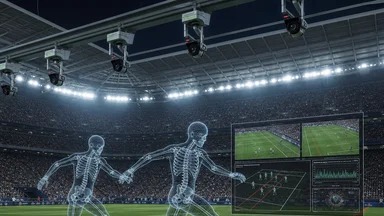
Video analysis has become a critical tool. Iceland's analysts compile clips of each opponent's defensive setups from the previous 12 months, identifying patterns such as which players are assigned to mark whom, where the goalkeeper positions himself, and how the team reacts to short corners. This information is then used to select specific routines for each match. In training, the team simulates those scenarios, with the set-piece coach calling out adjustments in real time. The result is a system that feels reactive rather than robotic, even though every movement is rehearsed. For instance, against a team that uses man-marking, Iceland may use a decoy run to pull a defender away, then deliver to a secondary runner. Against a zonal system, they may overload the near post with three attackers to create a numerical advantage.
Haraldsson's left-footed inswingers are particularly effective for this, as they curve toward the goal, making it difficult for goalkeepers to come off their line. Guðjohnsen's outswingers, by contrast, are used when the team wants to attack the far post with a header. The variety keeps opponents guessing; in qualifying, Iceland used a different routine on 80% of their corners, according to match data. This unpredictability is a deliberate design, as Böðvarsson noted: “If we do the same thing every time, they'll adjust. We have to show them something new each match.”
The Risk of Over-Reliance
For all its effectiveness, Iceland's set-piece dependency carries inherent risks. Their open-play xG per shot in qualifying was roughly 0.08, one of the lowest among qualified European teams. Only 2 of their 18 goals came from open play against top-50 opponents, which raises questions about their ability to create chances if set pieces dry up. If referees are lenient with fouls or if opponents concede few corners, Iceland could find themselves struggling to generate any attacking threat. This is the flip side of a hyper-specialised strategy.
Opponents are also likely to scout Iceland's routines. Brazil's coaching staff, for instance, will have analysed every corner and free kick from qualifying. They may adjust their zonal marking or assign a specific player to disrupt Haraldsson's delivery. Böðvarsson acknowledged in a recent interview that “teams will have done their homework,” which is why the squad has prepared multiple variations of each routine. But even with variations, there is a limit to how much you can disguise a system built on a few core movements. For example, if Brazil's defenders are instructed to stay goal-side and attack the ball, Iceland's near-post flick may be neutralised. In such cases, the team must rely on secondary options like the far-post header or the short-corner cutback.
The other risk is psychological. If Iceland fail to score from a set piece early in a match, the pressure mounts. Players may start forcing fouls in hopeful positions, or they may abandon the plan and try open-play combinations they have not rehearsed. Against Brazil, who can punish mistakes on the counter, such desperation could be fatal. The balance between sticking to the plan and adapting to the flow of the game is delicate. Head coach Arnar Viðarsson has emphasised that set pieces are a “tool, not a crutch,” but the numbers suggest they are the team's primary attacking method. That tension will define Iceland's tournament.
What a Set-Piece Surge Could Mean
If Iceland can replicate their qualifying set-piece efficiency in the group stage, they have a realistic path to the knockout rounds. Four points—likely a win and a draw—could be enough to advance, especially if they can take points off South Korea and Morocco while limiting Brazil to a narrow defeat or a draw. A single set-piece goal in a 1–0 win over South Korea, followed by a 1–1 draw with Morocco where the goal comes from a corner, would put them in a strong position. The margins are tiny, but Iceland have shown they can win those margins.
A successful set-piece campaign would also provide a replicable framework for set-piece-focused underdogs. Iceland's 2018 run was celebrated as a triumph of organisation, but many assumed it was a one-off. If they replicate it in 2026, it would demonstrate that a disciplined, data-driven approach to dead balls can level the playing field against wealthier, more talented squads. Other nations could study Iceland's methods: their emphasis on repetition, the integration of video analysis, and the continuity of personnel. The legacy would not just be about results but about proving that a hyper-specialised strategy can succeed at the highest level.
Yet even a well-executed set-piece strategy may not be enough. Brazil's individual quality, Morocco's defensive resilience, and South Korea's pace on the break all pose threats that no amount of rehearsal can fully neutralise. Iceland's tournament will likely be decided by a few key moments—a corner that finds a head, a free kick that bends just inside the post, a long throw that causes a deflection. Those moments are not random; they are the product of years of practice and a tactical philosophy that refuses to be romanticised. The outcome will test whether a hyper-specialised set-piece strategy can succeed at the highest level.