48-Team Format Forces Squad-Builders to Plan for Seven Matches Not Three
The 2026 FIFA World Cup will be the first to feature 48 teams, a change that fundamentally alters the tournament's competitive structure. Under the new format, the champion will need to win seven matches instead of six, and every team that reaches the knockout stage must play at least four games. This shift forces national-team coaches and technical directors to reconsider how they build their squads, with an emphasis on depth, versatility, and load management that has no precedent in the tournament's history.
Seven-Match Path Makes Depth a Non-Negotiable Asset
The most obvious consequence of the expansion is the increased match count. In the 32-team era (1998–2022), the champion played seven matches only if they finished second in their group and then won every knockout round. Under the 48-team format, the champion will play exactly seven matches: two in the group stage, one in the round of 32, then four more knockout rounds. A team that wins its group and goes all the way will also play seven matches, because the round of 32 is fixed. This means every knockout-bound team must be prepared for at least four matches, and potentially seven. The previous maximum for any team that did not reach the final was five matches (if they lost in the semifinal and played a third-place match). Now, a team eliminated in the quarterfinals will have played five matches, the same as a semifinalist in 2014. The extra knockout round adds a full match load for everyone.
FIFA is reportedly considering expanding squad sizes from 23 to 26 players to accommodate the increased demands. Several national-team coaches have publicly supported the change, arguing that a 23-man roster is insufficient to cover the physical toll of seven matches in roughly four weeks. The 26-player proposal would allow coaches to carry an extra outfield player and an additional goalkeeper, or two more outfield players if they choose to go with two goalkeepers.
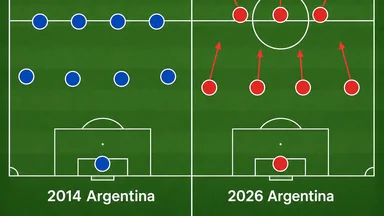
Historical data supports the need for more players. In 2022, Argentina used 21 of their 26-man squad (including three goalkeepers) over the course of the tournament. Only 14 players started more than one match, and several key contributors—such as Ángel Di María and Nicolás Tagliafico—were managed carefully to avoid injury. With one extra match, the rotation burden increases further.
Group-of-Three Dynamics Force Tactical Trade-Offs
The new group stage consists of 16 groups of three teams each, with the top two advancing to the round of 32. This means each team plays only two group matches instead of three. While this reduces the total number of group games, it also changes the strategic calculus significantly.
With only two matches, there is less room for error. A team that loses its opening match faces immediate elimination pressure; a draw in the second match may not be enough if goal difference or head-to-head results work against them. The traditional luxury of a third group match to recover from a poor start disappears entirely. Goal difference becomes less decisive because each team plays only two matches. In a three-team group, the maximum goal difference a team can achieve is limited by the number of games. Head-to-head results between the two tied teams will likely be the primary tiebreaker, as it was in the 1994 World Cup (the last time groups of three were used). This puts a premium on direct confrontations: a win against the group's strongest opponent could be enough to advance even if the other match is lost.
Consider a hypothetical 2026 Group F: Brazil, Serbia, and New Zealand. If Brazil beats Serbia 2-0 and then loses to New Zealand 1-0, while Serbia beats New Zealand 3-0, all three teams would have three points. The tiebreaker would be goal difference: Brazil +1, Serbia +3, New Zealand 0, so Serbia wins the group. Brazil would be second on +1 vs New Zealand's 0. This scenario shows how a single result can determine qualification, making every match critical.
Rotation also becomes riskier. With only two group matches, coaches cannot afford to rest key players for a third game. Every match matters for qualification, so starters must be physically and mentally prepared from the first whistle. This may lead to more conservative team selections in the group stage, with less experimentation than in the 32-team format.
Round-of-32 Introduces Mid-Tournament Reset
The round of 32 is a new knockout round that follows the group stage. It adds an extra layer of elimination before the round of 16, effectively creating a mid-tournament reset point. Teams that advance from the group stage will have three rest days before the round of 32, then another three days before the round of 16 if they win.
This scheduling pattern creates a unique challenge: teams must balance the need to recover from the group stage with the need to prepare for a sudden-death match. Coaches may choose to rotate heavily in the final group match if qualification is already secured, but with only two group games, that scenario is rare. Most teams will enter the round of 32 having played two intense matches, with little margin for injury or fatigue.
The round of 32 also introduces the possibility of a "group of death" survivor facing a relatively fresh opponent. A team that scrapes through a tough group might meet a team that cruised through an easier group, creating an imbalance in preparation time and physical readiness. This dynamic is familiar from the round of 16, but now it occurs one round earlier, increasing the total number of such mismatches.
Card accumulation rules remain unchanged: yellow cards are wiped after the quarterfinals, but a player who receives two yellows in the group stage or round of 32 will miss the round of 16. This adds an extra layer of caution for players on the edge of suspension.
Player Workload Data Reveals Hidden Strain
The 2022 World Cup provided a useful benchmark for player workload. Argentina's starting XI in the final had accumulated an average of 570 minutes over seven matches, with several players exceeding 600 minutes. Lionel Messi played 690 minutes, the most of any outfield player. The physical demands were comparable to a club season's Champions League campaign: the 2023–24 Champions League winner, Real Madrid, played 13 matches en route to the title, but those were spread over nine months with regular rest periods.
In the World Cup, matches are compressed into a four-week window with only three or four days between games. The addition of a seventh match increases the total workload by roughly 15% compared to a six-match tournament. For players who start every match, that could mean an extra 90–120 minutes of high-intensity action in the same time frame.
The five-substitute rule, introduced permanently in 2020, helps mitigate fatigue. Coaches can now make up to five substitutions per match, allowing them to rest key players late in games. However, the rule applies to all matches, so the benefit is proportional; the extra match still adds cumulative strain. Some analysts have suggested that the 26-player squad proposal is a necessary complement to the five-sub rule, as it gives coaches more fresh legs to call upon.
Injury data from recent tournaments suggests that muscle injuries spike in the knockout rounds, particularly in extra time. The round of 32 introduces an additional sudden-death match that could go to extra time, increasing the risk of overuse injuries. National-team medical staffs are already planning for higher injury rates and more conservative return-to-play protocols.
Squad Composition Must Prioritise Positional Versatility and Key Zone Depth
With limited squad space and increased match load, coaches will value players who can perform multiple roles. The 26-player proposal, if approved, gives coaches three extra slots, but those slots are likely to be filled by versatile outfield players rather than specialists. Consider the example of Jamal Musiala, who can play as an attacking midfielder, winger, or false nine. Such a player offers tactical flexibility without consuming a separate roster spot for each position. Similarly, full-backs who can also play in midfield—like Joshua Kimmich or João Cancelo—become invaluable because they can cover two positions with one squad slot. The third-choice goalkeeper position may be sacrificed in favor of an outfield player. In 2022, several teams carried only two goalkeepers in their 26-man squad, using the extra slot for an additional defender or midfielder. This trend is likely to continue, especially if the squad size remains at 23. Some coaches have argued that the risk of needing a third goalkeeper is lower than the risk of running out of fit outfield players in a seven-match tournament. Injury-prone stars face difficult selection decisions. A player with a history of muscle injuries may be left out if the medical staff believes he cannot withstand the load. Conversely, a player who can play 90 minutes in multiple positions may be prioritized over a more talented but fragile specialist. Data from 2018 and 2022 shows that teams with deeper, more versatile squads tended to advance further; France in 2018 and Argentina in 2022 both used more than 20 players over the course of the tournament.
While versatility is valuable overall, certain positions require dedicated depth because of the unique demands of knockout football. Central midfield is the most critical area: teams need at least three reliable options who can start and control the tempo. In 2022, Croatia reached the semifinals using three different midfield combinations, with Luka Modrić, Mateo Kovačić, and Marcelo Brozović rotating based on opponent and fitness. Centre-back is another zone where depth is essential. A team that loses its first-choice centre-back to injury or suspension in the round of 32 may struggle to replace them with a player of similar quality. In 2022, Brazil's defensive solidity was compromised by the absence of Neymar (an attacker, but the principle applies) and the late injury to Danilo. The ideal squad includes two centre-backs who can start and two more who can step in without a major drop-off. Wide attackers with pace become even more valuable in extra time, when tired defenses are vulnerable to counter-attacks. Coaches may prioritize players who can maintain speed deep into matches, even if their technical quality is slightly lower. Penalty-taking ability also becomes a selection factor, as the round of 32 and subsequent knockout rounds may be decided by shootouts. In 2022, Croatia's penalty prowess was a key factor in their success. Set-piece specialists, already important, gain additional value. In tight knockout matches, a single corner or free-kick can decide the outcome. Teams that invest in set-piece coaching and carry specialists—like a tall centre-back who scores from corners—have an edge. Iceland's use of set-piece patterns in 2018 and 2022 is a model that many teams are adopting. The overall trend is clear: the 2026 World Cup will likely require 15–16 regular contributors, up from the 13–14 that typically featured in the 32-team era. This places a premium on squad building that balances star talent with reliable depth.
Pre-Tournament Friendlies and Camp Design Change
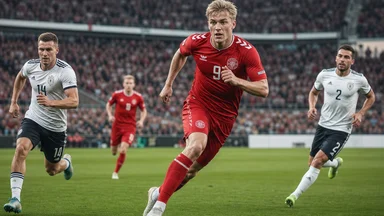
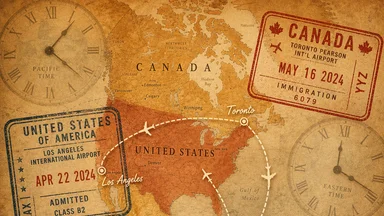
The expanded format also influences preparation. FIFA's international calendar includes a pre-World Cup window of roughly two weeks before the tournament. Teams may schedule up to four friendlies instead of the typical two or three, to simulate the match load and test different lineups. For example, Germany's coach Julian Nagelsmann has already indicated plans to organize four warm-up matches in June 2026, including a high-intensity friendly against Argentina, to prepare his squad for the seven-match grind. Altitude and climate adaptation become more complex with 11 host cities across three time zones in North America. Teams must decide where to base their camp, factoring in travel distances between group matches and potential knockout venues. In 2022, Brazil trained in Qatar for three weeks before the tournament, but the geography of 2026 means that base camps could be in different climate zones than match venues. Travel between group matches matters more than ever. A team playing its group matches in Vancouver, then Seattle, then Los Angeles would face significant travel compared to a team staying in one region. Coaches may prioritize players who recover quickly from travel and adapt to different time zones. The example of 2022 Brazil, which spent three weeks in Qatar, shows the value of a stable base camp. For 2026, teams may choose to stay in one central location and fly to matches, or they may rotate base camps to reduce travel. The decision will depend on the team's geographical draw and the preferences of the coaching staff.
One trade-off is that more friendlies increase injury risk. Playing four matches in two weeks could exhaust players before the tournament even starts. Coaches must balance the need for preparation with the need to keep players fresh. Some may opt for closed-door scrimmages instead of full international friendlies to control intensity. Another trade-off is that the 26-player squad, if adopted, may reduce the incentive for players to accept versatile roles, as they could be selected as specialists. However, the match load is so high that versatility remains a key asset.
Conclusion: A Structural Shift That Rewards Planning
Ultimately, the 48-team format represents a structural shift that rewards planning, depth, and adaptability. While the tournament's essence remains the same—a knockout competition to crown the world's best—the path to the final is longer and more demanding. Squad-builders who fail to account for the extra match load will find themselves at a disadvantage, regardless of their first-choice talent. The key trade-off is between star power and reliable depth: teams that prioritize versatile, durable players over fragile superstars may have an edge in the later stages. As the 2026 World Cup approaches, every national-team technical director will be weighing this balance, knowing that seven matches—not three—now define the road to glory.