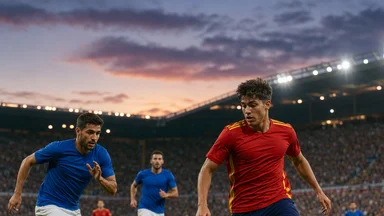
Goalkeeper Depth Charts Favor France and Argentina Ahead of 2026
When the 2026 World Cup kicks off with 48 teams, the margin between winning and going home early may well rest on the goalkeeper jersey. A single injury or suspension can derail a campaign, as Germany learned in 2022 when Manuel Neuer's absence exposed a thin backup plan. France and Argentina enter the tournament with the deepest goalkeeper pools, but other nations are scrambling to close the gap.
Why a Strong Goalkeeper Pair Is a Tournament Edge
The 2018 World Cup showed the value of depth: France used Hugo Lloris for all seven matches, but Steve Mandanda was a trusted deputy who could step in without a tactical drop-off. In 2022, Argentina's Emiliano Martínez played every minute except the group-stage finale against Poland, where Gerónimo Rulli kept a clean sheet. That kind of seamless rotation is rare.
Injury risk is the most obvious threat. Neuer's broken leg in 2022 forced Germany to rely on Marc-André ter Stegen, who was returning from his own shoulder issue. The result: Germany exited in the group stage for the second consecutive tournament. Suspension is another variable—a red card to a first-choice keeper can force a backup into a knockout match with no preparation.
Depth also allows tactical flexibility. A manager may prefer a goalkeeper with better distribution against a high-pressing opponent, or a specialist shot-stopper when defending a lead. France's Didier Deschamps rotated his keepers in the 2023-24 Nations League without any drop in performance, a luxury few teams share.
With the expanded 48-team format, teams will play up to seven matches if they reach the final. The extra knockout round increases the likelihood that a second-choice goalkeeper will be needed. Those who neglect this position risk a short tournament.
France's Unmatched Depth: Maignan, Areola, and Samba
France's goalkeeper room is arguably the strongest in the world. Mike Maignan, the AC Milan starter, has posted a goals-prevented figure of roughly 0.72 per 90 minutes over the last two seasons, putting him among Europe's elite. His reflexes and command of the penalty area make him a natural successor to Lloris.
Behind Maignan, Alphonse Areola has accumulated a save rate near 78% in his Premier League appearances for West Ham. He started several Champions League matches and has never looked out of place. Then there is Brice Samba, who kept six clean sheets in Ligue 1 for Lens in 2023-24. All three are under 30, meaning they should peak together through the 2026 cycle.
Deschamps has tested his depth. In a Nations League match against Austria, Maignan was rested and Areola started, producing a performance that drew no criticism. That kind of trust allows a coach to manage minutes without fear. France's only concern is whether Maignan's injury history—he missed several months in 2023 with a calf problem—could resurface.
If Maignan is unavailable, Areola or Samba could start without a significant downgrade. That is a claim few other nations can make. France's depth is a luxury that could prove decisive in a knockout run.
Argentina's Proven Pair: Martínez and Rulli
Emiliano Martínez has been Argentina's hero since the 2021 Copa América. His penalty-saving reputation is well earned: he stopped three spot-kicks in the 2022 World Cup quarterfinal shootout against the Netherlands and two more in the final. His expected goals prevented per match in that tournament was around 0.65, well above average.
Gerónimo Rulli, now at Ajax, started two qualifiers in 2023 and kept clean sheets in both. He is comfortable with the ball at his feet, an essential trait for Argentina's build-up under Lionel Scaloni. Rulli's distribution accuracy in the 2023-24 Eredivisie was above 85%, comparable to Martínez.
Scaloni has used Rulli in Copa América group matches, giving Martínez rest. In the 2024 Copa América, Rulli started against Canada and recorded a clean sheet. That rotation keeps both keepers sharp and builds trust. Argentina's third option, Franco Armani, is older but experienced in big games.
The gap between Martínez and Rulli is smaller than in most teams. If Martínez were unavailable, Argentina would not panic. That stability is a direct result of Scaloni's willingness to rotate in lower-stakes matches, a lesson other coaches might take note of.
Brazil's Question Marks: Alisson and Ederson, but Who After?
Brazil's first-choice keepers are world-class. Alisson Becker of Liverpool is an elite shot-stopper with a calm presence, though he has missed chunks of seasons with muscle injuries. Ederson of Manchester City is the best distributor in the world, completing roughly 88% of his passes, and has improved his shot-stopping. The problem comes after them.
In the 2022 World Cup, Brazil's third-choice keeper, Weverton, played two matches and conceded three goals. His performances raised doubts. For 2026, the likely third option is Bento, who moved to Al-Nassr in 2024. Bento has little experience at the highest level—only a handful of Champions League appearances—and has not faced a World Cup knockout atmosphere.
If both Alisson and Ederson were unavailable—a plausible scenario given Alisson's injury history and Ederson's occasional head injuries—Brazil would have to rely on an untested goalkeeper. That is a risk for a team that expects to reach the semifinals. Brazil's coaching staff may need to invest more minutes in their third keeper during qualifiers.
The gap between the top two and the rest is wider than for France or Argentina. Brazil's depth chart is top-heavy, and that could be exposed in a long tournament.
England's Emerging Stability: Pickford and Ramsdale
Jordan Pickford has been England's first choice for three major tournaments, accumulating eight World Cup clean sheets. His shot-stopping and ability to perform in high-pressure moments are proven. His distribution has improved under Everton's coaching staff, though it remains inconsistent.
Aaron Ramsdale, now at Arsenal, kept four clean sheets in the 2024-25 Premier League season before a mid-season injury. His form has fluctuated, but he has the confidence of Gareth Southgate, who values stability. Ramsdale's save percentage in the 2023-24 season was around 74%, slightly below Pickford's 78%.
England's third option is Nick Pope of Newcastle, who was first-choice before an injury in 2023. Pope's shot-stopping numbers are strong, but his distribution is a weakness. Southgate has not tested his depth much in competitive matches, preferring to stick with Pickford for almost every qualifier.
England's depth is comparable to France's on paper, but less proven in big games. Ramsdale has never started a World Cup knockout match. If Pickford were injured, England would face a step down in experience, if not necessarily in quality.
The Dark Horses: Germany, Portugal, and Morocco
Germany's goalkeeper situation has stabilized since Neuer's retirement. Marc-André ter Stegen is the clear No.1, but his injury history is a concern: he missed the 2022 World Cup due to a shoulder problem and has had back issues. The backup, Oliver Baumann of Hoffenheim, is a reliable Bundesliga keeper but has only two caps. Germany lacks a third option with top-level experience.
Portugal has Diogo Costa, who impressed at the 2022 World Cup with a goals-prevented figure near 0.55 per 90. His backup, Rui Patrício, is a veteran with over 100 caps but is now in his late 30s. The drop-off from Costa to Patrício is significant in terms of distribution and agility. Portugal's depth is adequate but not elite.
Morocco's Yassine Bounou was a standout in 2022, preventing roughly 0.50 xG per match. His backup, Munir Mohamedi, is a solid option with La Liga experience. Morocco's depth is better than most African teams, but Bounou's form for Al-Hilal has dipped slightly in 2024-25. If he is not at his best, Morocco's ceiling lowers.
Each of these teams has a clear No.1 but a noticeable gap to the No.2. In a tournament where rotation may be necessary, that gap could be decisive.
Trade-Offs in Goalkeeper Selection: Experience vs. Form
One of the hardest decisions for national team coaches is balancing a goalkeeper's club form against his international experience. A young keeper may be in excellent form but lack the composure needed for a World Cup knockout match. Conversely, a veteran may have the experience but be past his physical peak. For instance, Portugal's Rui Patrício has over 100 caps and has been through multiple tournaments, but his reflexes have slowed. Coach Roberto Martínez must decide whether to trust Patrício's experience or give minutes to a younger backup like José Sá, who has been consistent for Wolverhampton but has only a handful of caps. This trade-off is especially acute for teams with a clear No.1 and an unproven No.2.
Another trade-off involves distribution versus shot-stopping. Ederson is arguably the best distributor in the world, but his shot-stopping metrics are slightly below Alisson's. In a match where Brazil expects to dominate possession, Ederson's passing is a huge asset. But in a tight knockout game where the opponent may have few chances, a better shot-stopper like Alisson might be preferred. Coaches must weigh these factors when selecting their squad and planning for specific opponents.
Penalty-saving ability is another area where trade-offs emerge. A keeper like Martínez is exceptional in shootouts, but his distribution is average. If Argentina faces a team that presses high, Rulli's superior passing might be more valuable in open play. Scaloni has shown he is willing to make that switch, but not all coaches are so flexible. The risk of a shootout often leads coaches to prioritize penalty specialists, but that can backfire if the game never reaches penalties.
Counter-Argument: Is Depth Overrated?
Some analysts argue that goalkeeper depth is less important than having a world-class No.1. They point to examples like Italy in 2006, where Gianluigi Buffon started every match and the backup never played. Similarly, Spain in 2010 relied on Iker Casillas for the entire tournament. In those cases, the No.1 was so dominant that depth was irrelevant. However, the modern game is more physically demanding, and the expanded 2026 format adds extra matches. The risk of injury or suspension is higher than ever. Moreover, the quality of No.1 keepers has become so high that the drop-off to a backup is often steeper. In 2006, Buffon's backup was a capable veteran; today, many teams have a star No.1 and a largely untested No.2. The counter-argument holds for teams with an ironman No.1 who never gets injured, but that is increasingly rare. For most teams, depth is a crucial factor.
Another counter-point is that a team's defensive system can mitigate a goalkeeper's weaknesses. For example, a team that defends deep and limits shots may not need a world-class shot-stopper. But in high-stakes matches, chances are few and often high-quality, so a keeper's ability to make a big save becomes paramount. Depth ensures that if the No.1 is unavailable, the system can still function with a capable deputy.
Practical Takeaways: What Coaches Will Prioritize
As the 2026 World Cup approaches, national team coaches will evaluate goalkeepers on several key metrics. Injury history is paramount: keepers who start 30 or more club matches per season are more likely to be durable. Those with fewer than 25 starts carry a higher risk of breaking down during a tournament.
Penalty specialists are increasingly valued. Martínez, Maignan, and ter Stegen all have strong penalty-saving records. In knockout matches that go to shootouts, a goalkeeper who can win a round can decide the outcome. Coaches may select a second keeper specifically for that skill.
Distribution metrics matter more than ever. Ederson, Rulli, and Areola excel at breaking presses with accurate long passes. Teams that build from the back cannot afford a goalkeeper who hoofs the ball aimlessly. The ability to play under pressure is now a core requirement.
Age profile is another consideration. Keepers over 35 as primary backups carry a higher risk of decline. Portugal's Patrício and Argentina's Armani are exceptions, but most coaches prefer younger options. The 2026 tournament's extra matches will demand rotation, and teams with two keepers in their prime have a clear advantage.
For more on how tactical nuances shape World Cup outcomes, see our analysis of set-piece coaches' value and Iceland's set-piece patterns. The margin between success and failure often comes down to preparation and depth.