Mathys Tel Reluctance to Lead Line May Reshape France 2026 Front Shape
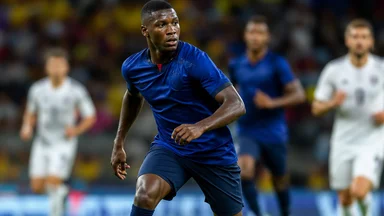
Mathys Tel was 17 when he scored his first Bundesliga goal for Bayern Munich, a composed finish against Stuttgart in August 2022. In the three seasons since, he has added 16 more league goals, most of them as a substitute or from wide positions. Yet for all his productivity, a quiet reluctance has become apparent: Tel does not want to lead the line. He drifts left, drops deep, and avoids the physical duels that define a traditional centre-forward. For France, preparing for the 2026 World Cup, that preference may force Didier Deschamps into a tactical reshaping of the front three—one that could either unlock a new fluidity or expose old vulnerabilities.
Tel's Bayern Stint Shows a Finisher, Not a Focal Point
Tel's 17 league goals in 2022–23 and 2023–24 combined came at a rate of roughly 0.68 expected goals per 90 minutes, a mark that places him in the upper quartile among European forwards his age. But only eight of those appearances were starts. The majority of his minutes arrived as a second-half substitute, often replacing Sadio Mané or Serge Gnabry on the left wing. Under Julian Nagelsmann and later Thomas Tuchel, Tel was rarely deployed as a central reference point.
Tuchel, in particular, used Tel as a wide forward who could cut inside onto his right foot. The instruction was clear: stretch the defence, not pin it. Tel's reluctance to hold up play against physical centre-backs—he won only about 38% of aerial duels in Ligue 1 before his move—made him a poor fit for the target-man role. Bayern's system, built around quick combinations and positional rotations, did not demand a focal point. Thomas Müller, the self-styled Raumdeuter, had long filled that space with movement rather than physicality.
Yet Müller's role remains unfilled at both club and international level. Tel, for all his promise, has not shown the instinct to occupy central defenders or the back-to-goal play that the position requires. His pass completion of 82% suggests tidy link play, but his passes are often sideways or backwards after receiving in the final third. The result is a player who finishes moves rather than orchestrates them.
France's 2026 Attack: Mbappé Fixed, Second Striker Fluid
Didier Deschamps has built his France side around Kylian Mbappé since the 2018 World Cup. The 4-2-3-1 formation that won the 2021 Nations League and reached the 2022 final places Mbappé as a left-sided forward with licence to drift inside. The central striker—Olivier Giroud in 2018 and 2022, then Randal Kolo Muani in 2024—acts as a pivot for hold-up play and aerial presence. Giroud's retirement after Euro 2024 left a void that has not been filled.
Antoine Griezmann, the second striker or right winger who provided creativity and defensive cover, is now 35 and unlikely to feature in 2026. His departure removes a key link between midfield and attack. Kolo Muani and Marcus Thuram have both been tried as central options, but neither has Giroud's physical dominance. Kolo Muani excels when running into space, not when receiving with his back to goal. Thuram is more comfortable on the left, where his dribbling and crossing are assets.
Tel enters this competition as the youngest and perhaps most technically gifted of the three. His passing range, ball retention, and finishing ability are superior to Thuram's in tight spaces. But his reluctance to lead the line creates a tactical mismatch: Deschamps wants a target for long diagonals from the full-backs and midfielders, and Tel is not that player.
Tel's Reluctance to Lead the Line Is a Tactical Mismatch
The data on Tel's back-to-goal play is instructive. Among forwards in Europe's top five leagues with at least 1,000 minutes in 2023–24, Tel ranked below the 50th percentile for successful passes under pressure, aerial duels won, and touches in the penalty area per 90. His heatmap shows a clear left-sided bias, with the majority of his receptions occurring in the left half-space or near the touchline.
This tendency clashes with Mbappé's own preference for the left channel. When both drift into the same zone, France lose width and become predictable. Deschamps has historically demanded that his forwards respect positional discipline; Mbappé is the exception, not the rule. Tel, as a younger player, would likely be asked to adapt. But adapting means playing against his instincts.
Giroud's shadow still looms over France's attack. The veteran striker provided a reliable outlet for long balls, won roughly 55% of his aerial duels, and occupied centre-backs so that Mbappé had space. Tel offers none of those qualities. If Deschamps persists with a target-man approach, Tel will be a poor fit. If he adapts the system, Tel could thrive.
How Deschamps Could Reshape the Front Three Around Tel
One option is to shift Mbappé into a central striker role, with Tel on the left as an inverted wide runner. Mbappé has played as a No. 9 for Paris Saint-Germain and Real Madrid, though he prefers starting from the left. His pace and finishing are suited to running at defenders, but his hold-up play is less refined than Giroud's. Still, Mbappé's goal output from central positions—roughly 0.6 goals per 90 in that role—is excellent.
Tel would then operate as a left-sided forward who cuts inside onto his right foot, similar to his Bayern role. His dribble success rate of roughly 62% allows him to isolate full-backs in one-on-one situations. On the right, Kingsley Coman or Ousmane Dembélé provide width and crossing ability. The midfield triangle of Aurélien Tchouaméni, Eduardo Camavinga, and Adrien Rabiot offers defensive cover and progressive passing.
This asymmetric shape—4-3-3 in possession, 4-4-2 without the ball—would give France unpredictability. The central striker (Mbappé) would drop deep to link play, while Tel and the right winger stretch the pitch. Pre-season friendlies in 2025 and early 2026 will be the testing ground. If Deschamps is willing to abandon the Giroud template, Tel could be the catalyst.
The 2026 Group Stage Will Force the Decision Early
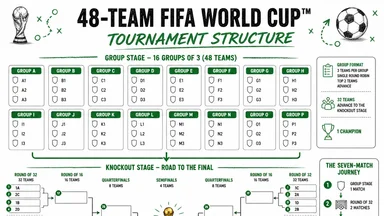
France's group draw for 2026 includes the Netherlands, Senegal, and New Zealand. The opening match against the Netherlands, a team that plays a high defensive line, suits Tel's in-behind runs. He could exploit the space between centre-back and full-back, where his acceleration is most effective. The second match against Senegal, however, is a different test. Senegal's physicality, particularly in central defence, could expose Tel's hold-up weakness.
Deschamps may start Kolo Muani against Senegal and then pivot to Tel against New Zealand, a match where France will dominate possession. The first two results will define the tactical direction for the knockout rounds. A win against the Netherlands with Tel as a false nine could cement the role. A loss or draw might push Deschamps back to a more conservative shape.
The group stage is not just about points; it is about building momentum and testing solutions. France's depth in attack means Deschamps can experiment. But Tel's reluctance to lead the line means the experiment must be deliberate, not reactive.
What the Data Says About Tel's Ceiling as a False Nine
Opta's similarity comps for Tel at age 20 draw comparisons to a young Thomas Müller rather than a young Karim Benzema. Müller's role as a Raumdeuter—finding space between the lines—is a closer match to Tel's skill set than the target-man profile. Tel's key passes per 90 (roughly 1.8) and shot-creating actions (3.2 per 90) are above average for his age, comparable to Griezmann at 20.
His pressing numbers are strong: about 22.4 pressures per 90, ranking in the 85th percentile among forwards. This defensive work rate fits Deschamps's demand for pressing from the front. But the pressing is often directed toward wide areas, not centrally. Tel pressures full-backs more than centre-backs, which is effective for a wide forward but less so for a false nine.
The ceiling, then, may be that of a 15-goal creator rather than a 25-goal leader. That is not a criticism—many elite players have thrived in that role. But it means France's attack would rely on Mbappé for the bulk of goals, with Tel providing assists and secondary finishes. The model works if the midfield contributes, but it lacks the Plan B that Giroud offered against deep blocks.
Trade-Offs and Counter-Arguments: The Case for a Traditional Striker
Not everyone agrees that Tel's reluctance should reshape the entire attack. Some analysts argue that France's best path is to find a natural centre-forward rather than adapt the system to a player who does not fit the role. Targets like Jonathan David, the Lille striker who scores roughly 0.5 goals per 90 and wins about 45% of aerial duels, could be a more traditional option. David's hold-up play and penalty-box presence are closer to Giroud's profile than Tel's. Deschamps could integrate David as a starter, keeping Mbappé on the left and Tel as an impact substitute.
Another counter-argument is that Tel's development at Bayern may push him toward a central role over time. At age 20, he still has room to grow physically and tactically. If he adds strength and improves his aerial duel win rate, he could become a more complete striker. Data from similar players—like Erling Haaland, who improved his hold-up play significantly between ages 20 and 22—suggests that such development is possible. However, Tel's current reluctance suggests a deep-seated preference that may not change quickly.
The trade-off is clear: adapting to Tel sacrifices a traditional focal point but gains fluidity and creativity. Sticking with a target man sacrifices Tel's best attributes but maintains a proven structure. Deschamps must weigh France's defensive solidity—which relies on a striker who can hold the ball and relieve pressure—against the attacking variety that Tel offers. In high-stakes knockout matches, defensive stability often wins out. But against weaker group-stage opponents, fluidity could be more effective.
One Bet That Shapes the Rest of the Tournament
If Tel starts as a false nine, France's shape becomes a fluid 4-3-3. Mbappé gets more central touches, increasing his shot volume. The full-backs—Theo Hernández on the left, Jules Koundé on the right—push higher to provide width, creating overloads in wide areas. The risk is transition vulnerability: when possession is lost, the full-backs are high, and the midfield triangle has to cover large spaces.
Counter-attacking sides like Senegal or potential knockout opponents such as England or Brazil could exploit that space. The reward is unpredictability. In the Giroud era, opponents knew France would cross from wide and look for the big striker. With Tel as a false nine, the attack becomes more varied: short combinations, through balls, and quick switches of play.
Deschamps has never been a revolutionary coach. He prefers stability and defensive solidity. But the absence of a natural successor to Giroud may force his hand. Tel's reluctance to lead the line is not a flaw; it is a constraint. How Deschamps works around that constraint will define France's attacking identity in 2026. The bet is that fluidity outweighs predictability. The group stage will provide the first answer.
Historical Precedents: When Teams Adapted to Similar Profiles
France is not the first top-tier team to face this dilemma. The 2014 Germany side adapted to Miroslav Klose's aging by using Thomas Müller as a Raumdeuter, with Mario Götze as a false nine in the final. That team won the World Cup, showing that fluidity can succeed. Similarly, the 2010 Spain side used no natural striker, deploying David Villa as a wide forward and Cesc Fàbregas as a false nine. That team also won the World Cup.
These precedents suggest that a false-nine approach can work at the highest level, provided the midfield and full-backs compensate. Germany's 2014 midfield—Kroos, Schweinsteiger, Khedira—provided defensive cover and creativity. Spain's 2010 midfield—Xavi, Iniesta, Busquets—controlled possession to minimize transitions. France's midfield of Tchouaméni, Camavinga, and Rabiot is less experienced but similarly balanced. If they can control games, Tel's fluid role becomes an asset rather than a liability.
However, counter-examples exist. The 2018 Argentina team tried a false-nine approach with Lionel Messi, but defensive instability led to early elimination. The difference was Argentina's lack of defensive structure. France's defensive core—Upamecano, Saliba, Hernandez, Koundé—is among the best in the world. That foundation could allow Deschamps to take the risk.
Ultimately, the decision will come down to performances in the months before the tournament. If Tel shows he can contribute as a false nine in friendlies and qualifiers, Deschamps may commit to the shape. If not, he will likely revert to a more conventional striker, leaving Tel as a wide option. The 2026 World Cup will be the ultimate test of whether a reluctant leader of the line can still lead France to glory.