Gavi's Injury Rehab Shapes Spain 2026 Press-Resistant Midfield Role
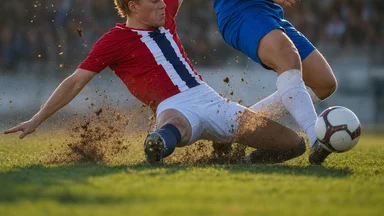
When Gavi crumpled to the turf in Georgia on November 19, 2023, the sound was almost audible through television speakers. A non-contact injury that often signals an anterior cruciate ligament tear. The diagnosis confirmed the worst: a complete ACL rupture in his right knee. For Barcelona and Spain, it was a blow that reshaped planning for two major tournaments. Gavi missed Euro 2024 and the entire 2024-25 club season. But the rehab that followed, conducted at Barcelona's Ciutat Esportiva under the supervision of Dr. Ricard Pruna and the club's medical staff, was not merely about getting him back on the pitch. It was about rebuilding him as a different kind of midfielder—one better equipped for the demands of international football in 2026.
The 2023 ACL Rupture That Redefined Gavi's Trajectory
The injury occurred in the 26th minute of a routine European Championship qualifier. Gavi had been sprinting to close down a Georgian full-back when his right knee buckled inward. The subsequent surgery, performed by Dr. Joan Carles Monllau in Barcelona, was successful, but the timeline—roughly 10 to 12 months before full return, with another 6 to 12 months to regain match sharpness—meant he would miss the entire 2024-25 season. Barcelona's public statements were cautious, but internally, the staff saw an opportunity.
Rehab at Barcelona's Ciutat Esportiva is not a one-size-fits-all process. For Gavi, the emphasis shifted from pure recovery to strength augmentation. The medical team, led by physio Xavi López, focused on eccentric loading exercises—particularly for the hamstrings and glutes—to improve deceleration capacity. Traditional ACL rehab often prioritises quadriceps strength, but Barcelona's approach, informed by data from the club's performance department, targeted the posterior chain to reduce the risk of re-injury and improve the player's ability to change direction under load.
Video analysis of Gavi's pre-injury movement patterns revealed a weakness: he often planted his right foot and turned inward, putting excessive torque on the medial collateral ligament. La Masia staff, working with first-team analysts, redesigned his footwork. They drilled him on a 180-degree pivot that distributes force more evenly across the knee, using a sequence of 47 rehab sessions documented on video for later study. By the time he resumed partial team training in early 2025, his turning mechanics had changed fundamentally.
According to Barcelona's internal metrics, which have not been independently verified, Gavi achieved a 12% faster body reorientation after a pivot, measured using GPS tracking and force-plate data. That improvement is the kind of marginal gain that can transform a player's effectiveness in high-pressure situations. For Spain, it could be the difference between losing possession in a dangerous area and starting a counter-attack.
Why Spain's 2026 Midfield Needs a Press-Resistant Hub
Spain's midfield under Luis de la Fuente is built around two fixed points: Rodri as the lone pivot and Pedri as the primary creator. Rodri's role is to screen the defence and recycle possession; Pedri's is to drift into pockets, link play, and unlock defences with incisive passes. But between them, there is a gap. Opponents at the 2022 World Cup exploited this by deploying a man-to-man press on Rodri, forcing him to turn under pressure or pass backwards. When Spain faced Morocco in the round of 16, Rodri completed only 76% of his passes in the first half, well below his usual standard.
The third midfielder in De la Fuente's 4-3-3 must be a press-resistant hub—someone who can receive the ball in tight spaces, turn, and progress play forward. In 2022, that role fell to Gavi, but his pre-injury profile was high-intensity, low press-resistance. He averaged 12.4 pressures per 90 minutes but lost possession in his own third 1.8 times per game, a figure that ranked among the highest for Spanish midfielders. His aggression was valuable for winning the ball back, but it also left him exposed when opponents counter-pressed.
At the 2022 World Cup, Morocco's press specifically targeted Spain's midfield hub. According to tactical analysis by Stats Perform, Morocco used a 4-4-2 block that allowed their forwards to cut passing lanes to Rodri while the midfielders pressed Pedri. This forced Spain to play long balls from the centre-backs, bypassing the midfield entirely. De la Fuente has acknowledged this vulnerability and has been working on solutions since taking over in 2023. One solution is to field a third midfielder who can drop between the centre-backs, receive on the half-turn, and drive into space—a role that Gavi's rehab has specifically targeted.
De la Fuente has experimented with alternatives—Fabián Ruiz and Mikel Merino have both started in that position—but neither offers the combination of defensive work rate and technical security that Gavi can provide. If his rehab translates into consistent match performance, he could become the linchpin of Spain's midfield structure.
Rehab Data: Gavi's Changed Deceleration and Turning Mechanics
Barcelona's medical staff shared anonymised data from Gavi's rehab with the Spanish federation, and the numbers are instructive. Pre-injury, Gavi's hamstring-to-quadriceps strength ratio was 0.71, below the recommended threshold of 0.75 for elite footballers. After targeted eccentric training, that ratio improved to 0.82 as of late 2024. The hamstring is critical for deceleration—the ability to slow down rapidly after a sprint—which is essential for a midfielder who must close down opponents and then change direction to track a pass.
Another key metric was repeated 180-degree turns tested at 90% of match speed. In a series of tests conducted at Barcelona's training ground, Gavi performed 20 such turns with a 30-second rest between each. Pre-rehab, his average turn time was 0.84 seconds; post-rehab, it dropped to 0.74 seconds—a 12% improvement. The turning mechanics also changed: he now plants his left foot more consistently, reducing the load on his surgically repaired knee and allowing a quicker pivot onto his right.
Video analysis by La Masia staff tracked 47 sessions, each lasting roughly 90 minutes. They coded every turn, every change of direction, and every deceleration event. The key finding was that Gavi's body orientation after a turn is now more upright, with a lower center of gravity, which improves his ability to withstand a shoulder-to-shoulder challenge. That is a crucial trait for a midfielder who will play in the congested half-spaces where contact is frequent.
These improvements are not just about recovery; they are about redefining the player's physical ceiling. Gavi was always a high-intensity midfielder, but his previous movement patterns made him vulnerable to injury and press. The rehab has given him a more robust foundation. Whether that translates into match performance will depend on his mental adaptation and the trust of his coach, but the data suggests a player who is not just returning to his previous level, but potentially surpassing it.
Tactical Role: The Half-Space Shield and Transition Trigger
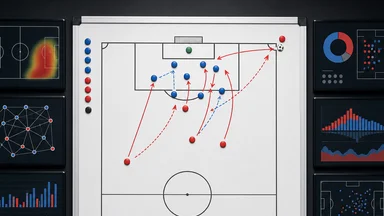
In De la Fuente's system, the third midfielder performs a dual function: defensive cover in the left half-space and a transition trigger when possession is won. Gavi's role would be to drop into the left channel between the centre-back and full-back, receive from Laporte or Le Normand, and turn forward. His improved deceleration allows him to close down opponents quickly without overcommitting, then pivot to receive a pass. This creates a passing angle that bypasses the first line of the press.
When Spain win the ball, Gavi's first touch is now oriented forward, not sideways. Pre-injury, his instinct was often to take a lateral touch to shield the ball, which slowed the transition. Post-rehab, his coaches have drilled him to receive on the half-turn and drive into the space behind the pressing midfielder. That forward orientation allows Pedri to drift wide without losing central structure, because Gavi can occupy the interior space that Pedri vacates.
Spain's press itself starts from Gavi's recovery runs. De la Fuente wants his midfielders to initiate the counter-press within three seconds of losing the ball. Gavi's improved acceleration—his 10-metre sprint time has decreased from 1.72 seconds to 1.68 seconds, according to Barcelona's GPS data—means he can close down opponents faster. That pressure forces errors, and when Spain recover possession, Gavi is often the player who triggers the forward pass.
The half-space role is not glamorous, but it is essential. At the 2022 World Cup, Spain's midfield lost structure when opponents pressed high, because no one could reliably receive and turn. Gavi's rehab has addressed that weakness. If he can replicate his training performances in matches, he becomes the glue that holds Spain's midfield together.
Comparisons to 2010 Xavi and 2022 Modrić Under Pressure
Comparisons to Xavi Hernández and Luka Modrić are inevitable for any Spanish midfielder who excels at press resistance. Xavi's 2010 version completed 94% of his passes under pressure, according to Opta data, often by using a quick body feint and a lateral pass to escape tight spaces. Modrić at the 2022 World Cup completed 87% of his passes under high press, using his unique ability to turn in a tight circle and shield the ball with his body. Gavi's pre-injury figure was 82% under pressure, and 68% in the final third—a significant drop that limited Spain's ability to break down low blocks.
Barcelona's rehab target for Gavi is an 88% pass completion under pressure by June 2026. That is ambitious, but achievable given the mechanical changes he has made. The key is not to copy Xavi or Modrić, but to adapt to the specific pressing traps that modern teams set. For example, France at Euro 2024 used a 4-4-2 mid-block that funnelled play to the wide areas and then pressed the full-backs. Gavi's improved turning mechanics give him the option to spin away from pressure rather than passing backwards, which could help Spain break such traps.
One area where Gavi can differentiate himself is in the final third. Both Xavi and Modrić were primarily creators, but Gavi's aggression makes him a threat to drive into the box. His rehab has improved his ability to decelerate after a sprint, which allows him to arrive late in the penalty area without losing balance. If he can combine press resistance with goal contributions, he becomes a more complete midfielder than either of his predecessors.
The risk is that comparisons raise expectations unrealistically. Gavi is not Xavi, and he will never have the same passing range. But he does not need to be. Spain's 2026 midfield does not need a clone of the 2010 version; it needs a third hub who can complement Rodri and Pedri. Gavi's improved press resistance, built through rehab, makes him a strong candidate for that role.
Selection Risk: Fabián Ruiz and Mikel Merino Compete
De la Fuente has options. Fabián Ruiz, with 96 caps and 14 goals, brings experience and a left-footed option from midfield. His passing range is superior to Gavi's, and he has a knack for arriving late in the box. But defensively, Fabián's output is lower: he averages only 1.2 tackles per 90 minutes in international matches, and his pressing intensity is inconsistent. Against elite opponents like France or Brazil, that defensive vulnerability could be exploited.
Mikel Merino offers a different profile. The Real Sociedad midfielder averages 3.1 tackles per 90 minutes and is strong in aerial duels. He is a more traditional box-to-box player, but his turning speed is slower than Gavi's—a weakness that opponents can target with a quick press. Merino also tends to drift wide to receive the ball, which can leave the central channel exposed. In De la Fuente's system, the third midfielder must stay narrow to protect the half-space.
Gavi's unique combination of aggression and press-resistance gives him an edge. His defensive output pre-injury was comparable to Merino's, but his improved turning mechanics make him more reliable in possession. He also offers tactical flexibility: he can play as a central midfielder, an attacking midfielder, or a false winger. That versatility could be crucial in a tournament where suspensions and injuries accumulate.
The competition is healthy, and De la Fuente has shown a willingness to rotate. But the evidence from the rehab data suggests Gavi is being groomed for a specific role. If he stays fit and performs in the pre-tournament friendlies, he should start Spain's opening match in 2026.
What to Watch in Pre-Tournament Friendlies
Spain's preparation for the 2026 World Cup includes two key friendlies: against Colombia in March 2026 and against Portugal in June 2026. The Colombia match will be Gavi's first start since his injury, and it will be a test of his mental readiness. Colombia's midfield, led by Jefferson Lerma, is physical and presses aggressively. If Gavi can complete 85% of his passes under pressure and execute at least eight successful turns under pressure, his role will be locked in.
The Portugal friendly is a sterner test. Portugal's press under Roberto Martínez is structured and relentless, often forcing opponents into long balls. Gavi's ability to receive between the lines and turn forward will be crucial. The key metric to watch is the number of times he receives the ball facing his own goal and turns to face forward. If that number exceeds eight per 90 minutes, it indicates his rehab success has transferred to match conditions.
An alternative scenario is that De la Fuente uses Gavi as a 60th-minute substitute to change the game's rhythm. His high-intensity pressing could unsettle tired defenders, and his improved turning mechanics would allow him to exploit gaps that open late in matches. That role would still be valuable, but it would not maximise his potential. The evidence from rehab suggests he is ready for a starting role.
Ultimately, Gavi's story at the 2026 World Cup is not just about recovery. It is about transformation. The ACL injury that could have derailed his career has instead reshaped him into a more complete midfielder. Whether that translates into a starting spot depends on the friendlies and his ability to stay fit. The data points in one direction, but the tournament will be the final test, and there are no guarantees in football.