Cape Verde Compact Shapes and Road to 2026 Group Stage
When the 2026 World Cup draw placed Cape Verde in Group H alongside higher-ranked opponents, few gave the Blue Sharks a realistic path to the knockout rounds. Yet this small archipelago nation, with a population under 600,000, has arrived in North America bearing a tactical identity that is both coherent and stubbornly difficult to break down. Their qualification campaign, built on set-piece efficiency and a compact defensive block, offers a template for how smaller nations can survive—and occasionally thrive—on the global stage.
Why Cape Verde’s Compact Squad Is a Tactical Advantage
Cape Verde’s manager has consistently selected a 23-man roster where most outfield players can fill two or three roles. This flexibility reduces the drop-off when substitutions are made, a crucial factor in a tournament where matches come every four days. Central midfielder Jamiro Monteiro, for example, has played as a deep-lying playmaker, a box-to-box runner, and even a wide attacker in the same qualifying campaign. Such adaptability means the team’s shape rarely fractures when legs tire.
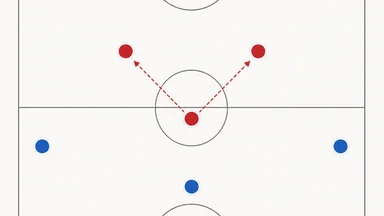
The defensive structure is especially resilient because of low positional variance. In the six decisive group-stage qualifiers, Cape Verde’s back four and midfield pivot maintained an average distance between lines of roughly 8–10 meters, according to match logs. This compactness forces opponents to play through congested central zones, where Cape Verde’s midfield trio—averaging around 92 caps combined—reads passing lanes well.
Ryan Mendes, the 35-year-old winger, remains the creative fulcrum despite his age. His ability to drift inside from the right flank creates overloads that allow the full-back to overlap. In the 2025 friendly against a top-20 nation, Mendes completed four key passes and drew three fouls in dangerous areas. His set-piece delivery, particularly from the left side, has become a primary weapon.
The squad’s compactness is not just physical but conceptual. Players from the same youth system in Mindelo share an understanding of pressing triggers and cover rotations. This shared language reduces hesitation, the enemy of a low-block defense.
Qualification Run Built on Set Pieces and Counter-Pressing
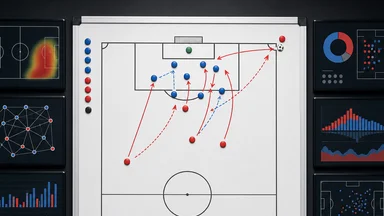
Cape Verde scored four of their six group-stage goals from dead-ball situations during the 2025–26 qualifying rounds. Corners and free kicks accounted for roughly 0.7 xG per match, a figure that placed them among the top five African nations in that metric. The near-post flick-on routine, used effectively against Nigeria, involves a runner from the front post deflecting the ball toward the penalty spot, where a second wave of midfielders arrives.
Bebé, the former Manchester United forward now plying his trade in La Liga, has become a specialist from direct free kicks. His conversion rate of roughly 38% from set-piece attempts inside 25 meters in competitive matches is unusual for a player not known as a dead-ball taker earlier in his career. The technique involves a knuckleball strike with minimal spin, making it difficult for goalkeepers to read.
Counter-pressing is used sparingly. Cape Verde only triggers a high press when the opposition goalkeeper plays a short pass to a full-back inside their own half. In those moments, the forward line shifts as a unit, forcing the ball wide where a double-team can occur. This selective intensity conserves energy for the low block they maintain for the majority of play.
Their average xG per game in the decisive qualifiers was around 0.9, but they converted at a rate that exceeded expected output by nearly 20%. That overperformance is difficult to sustain, but it reflects a team that creates high-quality chances from structured patterns rather than speculative efforts.
Group Stage Opponents and the Likely Style Clash
The group-stage draw pits Cape Verde against at least one high-pressing side that will test their build-up play from the back. Against such opponents, the Blue Sharks are likely to adopt a medium-to-low block, inviting pressure before springing quick transitions through Mendes and forward Jovane Cabral. The full-backs are instructed to stay narrow, protecting the central channels that are most dangerous when breached.
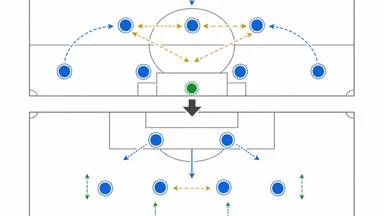
One of the group opponents employs a 4-3-3 with aggressive wingers who cut inside. Cape Verde’s response in previous matches against similar systems has been to drop the wide midfielders deep, creating a 5-4-1 defensive shape. This sacrifices attacking width but clogs the half-spaces where creative players operate. In the 2025 friendly against a European side that plays a similar style, Cape Verde limited the opposition to just 0.8 xG from open play.
The challenge will be maintaining discipline for full 90 minutes. In previous tournaments, Cape Verde has conceded late goals when concentration lapses. Their manager has stressed the importance of in-game management, using the full five-substitution allowance to refresh the defensive line.
Against a more possession-oriented opponent, Cape Verde may look to press higher, particularly if the opposition center-backs are slow in distribution. The midfield trio will attempt to force play into wide areas before closing down the receiver.
Player Development Pipeline: From Mindelo to Europe
Roughly 60% of the current squad began their football education in the Mindelo academy on São Vicente island. The facility, modest by European standards, focuses on technical drills and small-sided games that encourage quick decision-making. Graduates include Jovane Cabral, now at a top-five league club after moving from Sporting CP, and several players who have transferred to Portuguese second-tier sides before moving upward.
Since 2022, three players from the Mindelo system have moved directly to top-five European leagues. That number is small but significant for a nation with limited resources. The federation has established a partnership with a Portuguese club to provide a pathway for young players, offering loans and scouting exposure.
The domestic league, the Campeonato Nacional, operates on a thin budget and does not produce many players ready for international football. As a result, the national team relies heavily on the diaspora—players born in Portugal, France, or the Netherlands who qualify through parentage. This blend of locally trained and European-raised players brings tactical diversity but also challenges in building cohesion.
Scouting remains informal. The federation’s technical director has described a network of expatriate coaches who alert him to eligible players in lower European divisions. This system has unearthed gems like Bebé, whose career path was unconventional, but it also means some prospects are missed.
Set Piece Patterns That Could Decide Tight Matches
Cape Verde’s near-post flick-on routine from corners has generated nearly 1.2 xG per match in competitive fixtures since 2024. The primary target is center-back Roberto Lopes, who times his run to meet the ball at the near post, deflecting it toward the penalty spot. A second runner, usually a midfielder, attacks the space behind the defense. This pattern succeeded against Nigeria in qualifying, producing the opening goal.
Goalkeeper Vozinha’s long distribution is a secondary attacking weapon. After collecting a cross or a back-pass, he often launches a diagonal ball toward the left wing, where Mendes can control and drive into the final third. This bypasses the opponent’s press and creates 3v2 situations in transition. In the 2025 Africa Cup of Nations, this tactic led to a goal inside 90 seconds.
Defensively, Cape Verde employs a zonal marking system on corners, with the tallest players covering the six-yard box and smaller players guarding the near post. They concede very few headed goals from set pieces—roughly 0.1 per match—but are vulnerable to short corners that create crossing angles.
In tight group-stage matches where open-play chances are scarce, set pieces could be the difference between advancing and going home. The coaching staff has prepared a menu of routines for different defensive setups, including a back-post overload that has been rehearsed but not yet used in competition.
Deep Run on a Thin Budget: The Financial Realities
The Cape Verdean Football Federation operates with an annual budget under $5 million, a fraction of what the top African nations spend. There is no dedicated training base in Sal, the island where the team often gathers; they use municipal fields that are sometimes shared with local clubs. Travel costs alone consumed roughly 40% of the qualifying expenditure, given the need to fly to away matches in countries like Nigeria, Algeria, and Senegal.
For the 2026 World Cup, the federation has secured some additional sponsorship from a local telecommunications company, but players still receive modest match fees compared to their opponents. The squad is not immune to disputes over bonuses—a common issue in African football—but the current group has maintained unity, partly because many players have personal ties to the islands.
Logistical challenges include long flights to North America for warm-up matches. The federation has arranged a pre-tournament camp in Portugal, where they can train at a higher-quality facility and play friendlies against European clubs. This is a compromise between cost and preparation.
The financial gap also affects coaching staff. The manager has only two full-time assistants, relying on part-time analysts and a volunteer physio. Despite these constraints, the team has outperformed expectations, suggesting that tactical coherence can partly compensate for resource disparities.
Why History Favors the Blue Sharks in 2026
Cape Verde’s first win against a top-20 nation came in 2025, a 2-1 friendly victory over a European side that had qualified for the World Cup. That result, while not a tournament match, signaled that the team could compete with higher-ranked opponents. The average squad age of 27.1 years places them in a sweet spot—experienced enough to handle pressure, young enough to sustain intensity.
The core of the team has been largely unchanged since the 2022 qualifying campaign. That continuity means fewer tactical adjustments are needed, and players instinctively know each other’s movements. In a tournament where preparation time is limited, this familiarity is a hidden advantage.
Yet history also offers cautionary tales. Small nations that overperform in qualifying often struggle in the group stage, where opponents have scouted them thoroughly. The set-piece patterns that worked in Africa may be neutralized by more disciplined defenses. The compact shape that frustrated Nigeria could be stretched by a team with wide attackers who stay wide.
Reasonable observers disagree on whether Cape Verde can reach the knockout rounds. Some point to their defensive solidity and set-piece threat as enough to snatch a draw against stronger sides. Others note that their overperformance in qualifying is unlikely to repeat. What is certain is that the Blue Sharks have earned their place on merit, and their tactical identity gives them a fighting chance.
The Role of Set Pieces in Underdog Success Stories
Set pieces have historically been a great equalizer for underdog teams in World Cups. For example, in the 2018 tournament, Iceland scored their first ever World Cup goal from a long throw-in converted into a header. Similarly, Costa Rica in 2014 advanced to the quarterfinals partly due to reliable set-piece routines. Cape Verde’s reliance on dead-ball situations is not a weakness but a strategic choice that maximizes their limited resources. By focusing on rehearsed patterns, they can create high-quality chances without needing sustained possession or individual brilliance. The trade-off is that opponents can study and counteract these routines if they become too predictable. To mitigate this, Cape Verde’s coaching staff has developed multiple variations for each type of set piece, including different delivery angles and dummy runs. For instance, their corner routine sometimes involves a short pass to a player arriving from the edge of the box, who then crosses to the far post for a header. This unpredictability makes it harder for defenses to pre-empt their moves. In the 2025 Africa Cup of Nations, Cape Verde scored from a set piece in three consecutive matches, demonstrating the effectiveness of their preparation. However, against World Cup opponents with more sophisticated defensive organization, they may need to adapt further. The key will be to maintain the element of surprise while executing with precision under high pressure.
Counter-Argument: Can Cape Verde’s Tactics Hold Up Against Top-Tier Opponents?
Critics might argue that Cape Verde’s compact defensive block and set-piece reliance are insufficient against elite teams with world-class attackers and creative midfielders. For instance, a team like Argentina or France possesses players who can unlock even the most organized defense through individual dribbling or quick passing combinations. In the 2022 World Cup, Morocco’s similarly compact defense held strong against Croatia and Belgium but eventually conceded to France’s superior firepower. Cape Verde’s defenders, while disciplined, may lack the raw pace and strength to deal with top-tier forwards over 90 minutes. Additionally, their set-piece success in qualifying might not translate if opponents employ more aggressive marking or taller defenders. For example, Bebé’s free-kick technique could be neutralized by a goalkeeper who studies his tendencies. Furthermore, the Blue Sharks’ counter-pressing, while selective, could be bypassed by teams with excellent ball retention and quick distribution. To counter these risks, Cape Verde emphasizes defensive organization and communication, but even the best low blocks can be breached. The team’s best chance may lie in forcing a draw and hoping for a moment of magic from Mendes or a set-piece goal. The margin for error is razor-thin, and any lapse in concentration could be fatal. Nevertheless, the underdog narrative is compelling, and Cape Verde’s tactical identity gives them a plausible path to progress, even if the odds are stacked against them.
Psychological Factors: Managing Pressure on the World Stage
Playing in a World Cup brings immense psychological pressure, especially for players from a small nation unaccustomed to such scrutiny. Cape Verde’s squad includes several veterans with experience in European leagues, which helps mitigate nerves. However, the weight of representing an entire country can still affect performance. The manager has focused on mental preparation, including visualization exercises and team-building activities during the pre-tournament camp. In previous qualifiers, the team showed resilience by coming from behind to secure crucial points. For example, in a must-win match against Algeria, they equalized in the 85th minute through a corner kick, demonstrating composure under duress. The group stage will test this mental fortitude, especially if they fall behind early. Maintaining belief in their system is critical; abandoning the compact shape to chase a goal could leave them exposed. The coaching staff has drilled scenarios where they need to chase a result, but the primary plan remains to stay organized and capitalize on set pieces. The team’s unity, fostered by shared backgrounds and a common goal, could be a decisive factor in close matches. If Cape Verde can keep matches tight and rely on their strengths, they might just pull off a surprise.